












































Army Patches Meaning: How to Read Symbols, Types, and Placement

Key Takeaways
- ‣ The meaning of custom Army patches depends on type, placement, and Army Regulation 670-1 working together.
- ‣ Shoulder Sleeve Insignia shows unit identity, while a combat patch marks former wartime service.
- ‣ The U.S. flag patch appears reversed on purpose so the stars face forward in motion.
- ‣ Tabs like the Ranger Tab represent an earned skill, not just membership in a unit.
Curious how your unit’s design would look as a finished patch? Start a free quote and see a proof before you commit.
What Army Patches Communicate
If you’re wondering what army patches’ meaning actually boils down to, it’s this: patches communicate unit identity, service history, and authorized status all at once. In the U.S. Army, that message only makes sense once you look at type, placement, and Army Regulation 670-1 together.
That’s not decoration. It’s a system built for quick recognition under pressure, and it works the same way whether you’re looking at a shoulder sleeve insignia, a tab, or a full-color patch on a dress uniform.
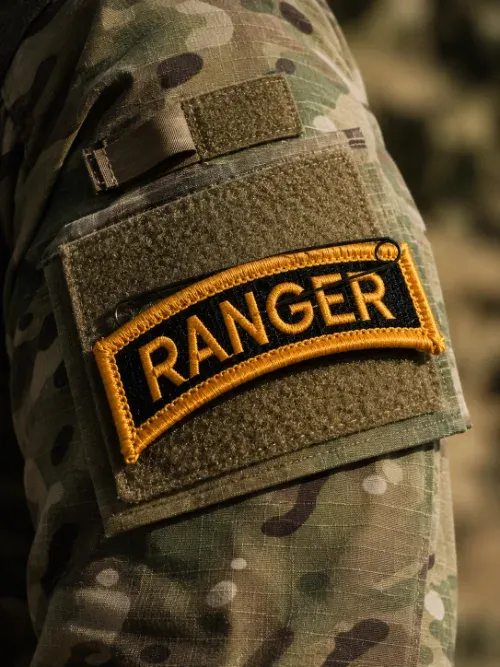

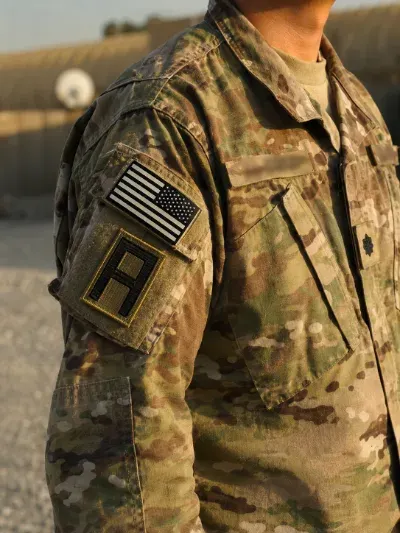
There’s no solid data on how often civilians misread military patches. But etiquette guides consistently warn people to skip wearing a patch tied to a rank, unit, or combat achievement they didn’t earn. Getting it right matters for anyone making these products too. A balance of quality and service, not just low price, is what separates a patch that feels earned from one that feels like a costume piece.
Patch vs. Badge vs. Insignia: Quick Definitions
A patch, whether it’s a personalized embroidered patch or a PVC patch, usually shows unit identity or authorized shoulder wear. A badge is different. Skill badges, marksmanship badges, and combat and special skill badges all point to a qualification, not a group. Identification badges and foreign badges add another layer, since allied nations sometimes authorize their own designs for joint service members. Insignia is the broad umbrella term covering rank, branch, and other official markers.
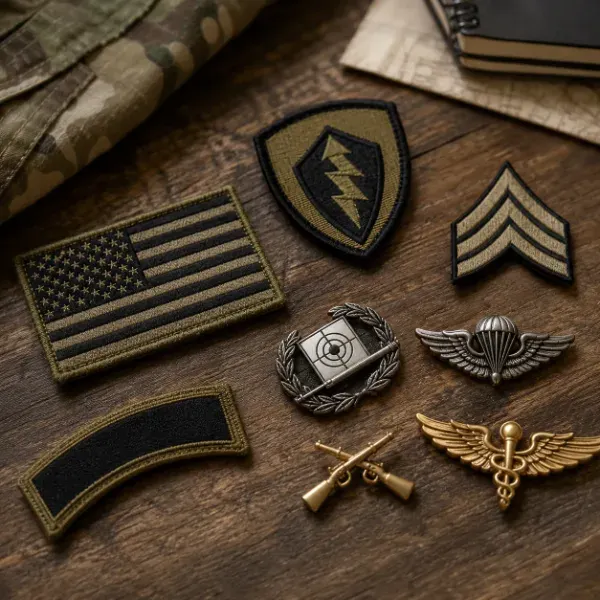
This kind of precision matters for anyone offering guidance for buyers who are not sure what they need yet. A shop with real unique product customization depth needs to know the difference before it can help someone order the right thing.
A Short History of Unit Patches and Why Standardization Exists
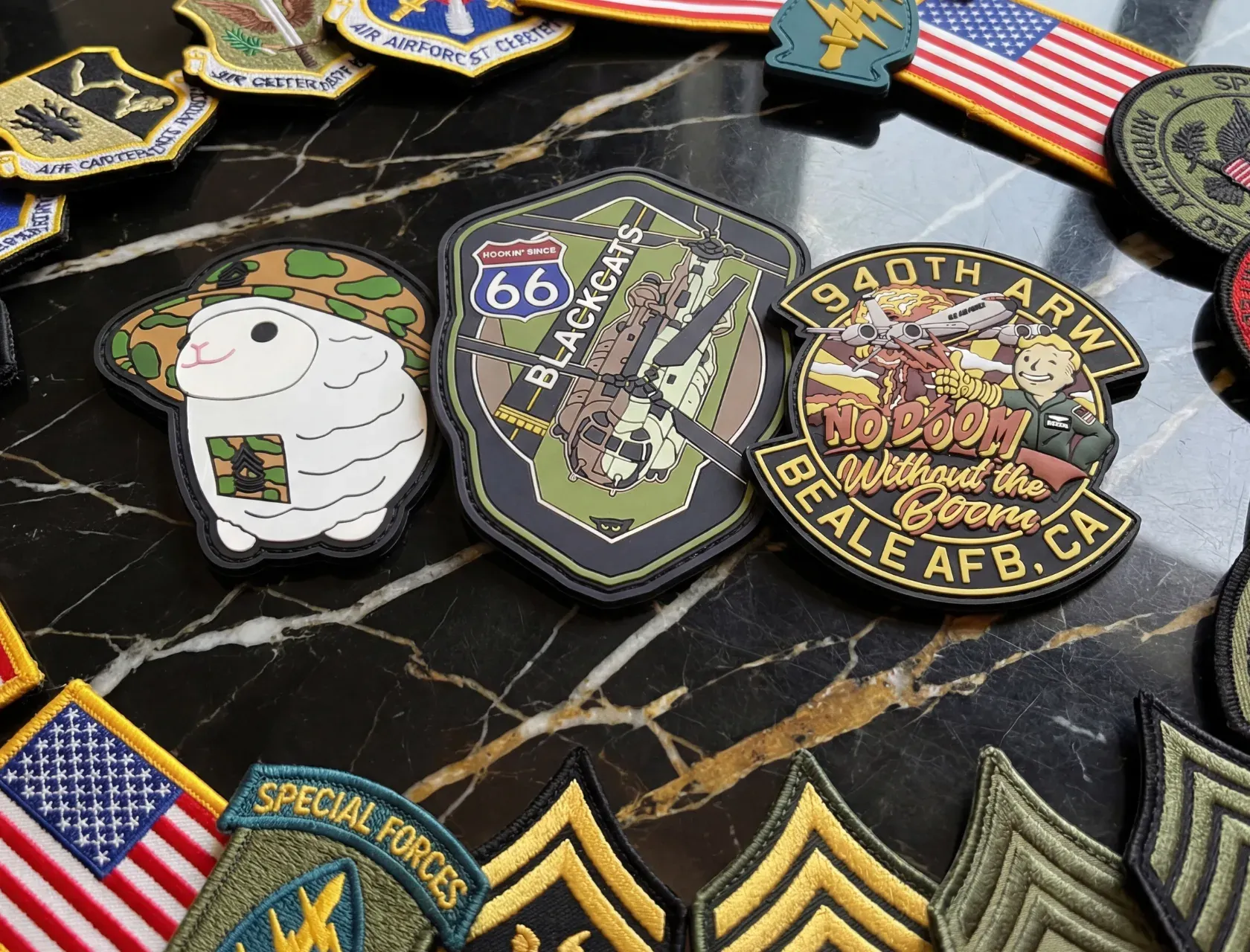
Shoulder sleeve insignia showed up as the Army grew into large formations that needed fast visual identification. A division patch or brigade insignia let commanders spot units at a glance, cutting down on confusion in crowded, chaotic settings.
As the Army got more specialized, patch systems grew right alongside modern uniform standards. That’s true for organizations of any size, honestly. Once a group scales up, standard visual identifiers stop being extras and start being tools. It’s the same reason a B2B-friendly service for larger group orders becomes so important once an order isn’t for a dozen people anymore.
Standardization keeps things consistent. It protects unit lineage and unit heritage the same way reorder support and consistency protect any long-running product line. A uniform system only works if everyone reads it the same way, which is also why a brand image that feels established and trustworthy carries weight in military heraldry, not just retail.
The Main Types of Army Patches on a Uniform
Start at the shoulders, then check the chest, then look for tabs and flags. Most uniforms carry a current unit patch, a combat patch from a past deployment, a flag patch, and sometimes a tab. Note whether it’s a subdued patch or a full-color patch too, since the same design can look completely different depending on the uniform.

Shoulder Sleeve Insignia (SSI): Unit Identity

The SSI usually shows a soldier’s current unit, often at the division or brigade level. It’s about lineage and mission heritage more than personal biography. Strong proofing and design guidance matter here, because small details in a patch can carry decades of meaning.
Combat Patch: Former Wartime Service
A combat patch marks former wartime service with a unit in an authorized hostile environment. The Army calls this the Shoulder Sleeve Insignia, Military Operations in Hostile Conditions, or SSI-MOHC. Direct combat contact isn’t required to qualify, and active duty, Reserve, and National Guard soldiers can all be eligible if their unit supported operations in a designated region.
Tabs: Ranger Tab and Specialized Skills
Tabs work differently than SSI. A Ranger Tab shows an earned qualification, not membership in a group. Some tabs stay with a soldier permanently. Others are tied to an assignment and come off once that assignment ends.
Reading Symbols: Color, Shape, and Iconography
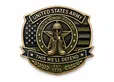
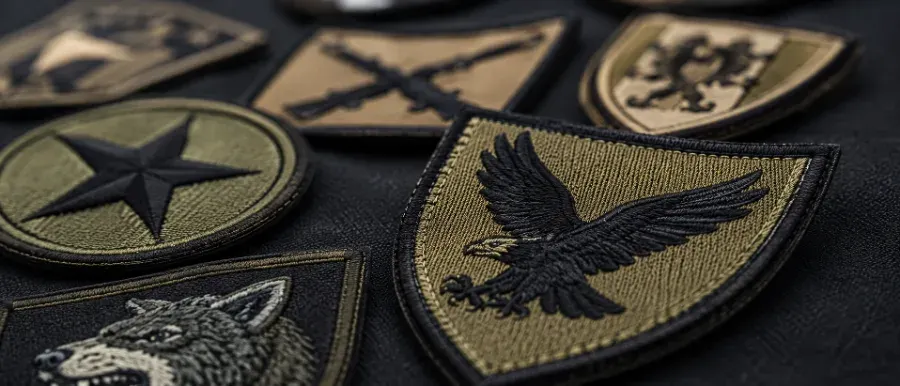
Army patch design borrows heavily from heraldry, so a shield, stars, or a motto usually point to lineage, values, or history rather than a soldier’s daily job. Read the center symbol first, since the symbolism there usually carries more history than daily duty, then look at the border and colorway around it.
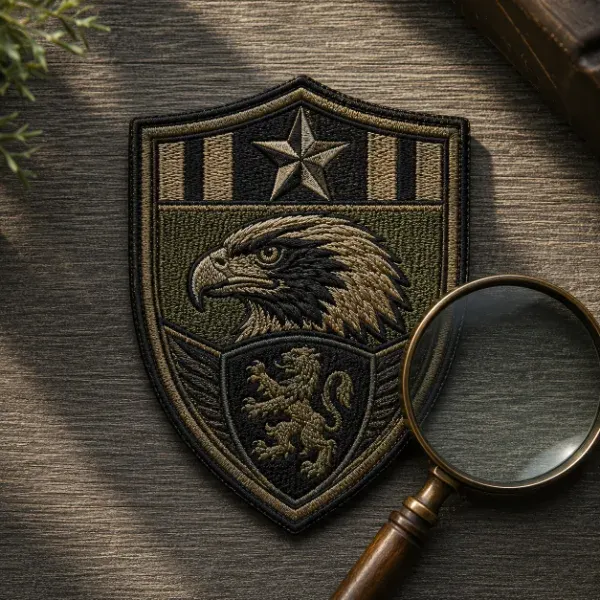
Animals often represent traits like speed or vigilance. Weapons and shields usually point to combat heritage or a notable campaign. None of it is meant to be read literally. A sword on a patch doesn’t mean the wearer’s job involves swords.
Patch Placement Standards and the U.S. Flag Patch
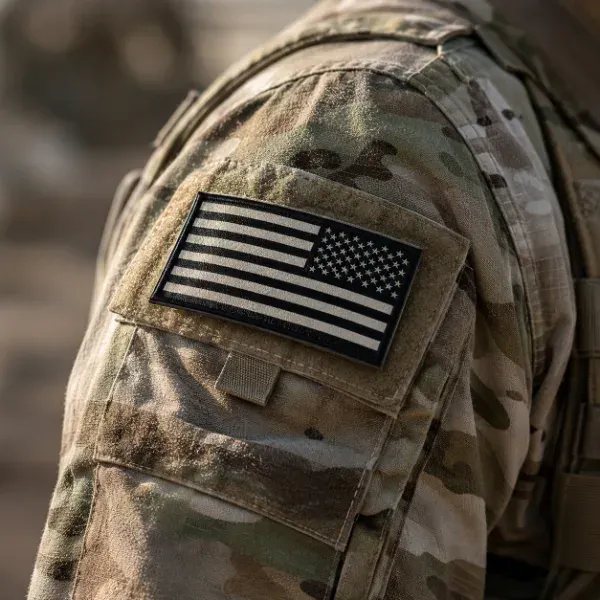
Patch placement standards change depending on whether someone’s wearing a dress uniform or a combat uniform, and incorrect placement can look unauthorized even on a legitimate patch.
The U.S. flag patch often looks backward at first glance. Army Regulation 670-1 requires a reversed flag on the right shoulder so the stars face forward, matching how a flag would look if it were carried into motion. That’s flag patch orientation, not a printing mistake.
Patch Materials and Styles Beyond the Uniform
Off the uniform, patches show up in a lot of styles. An embroidered patches vs. PVC patches comparison usually comes down to look and durability. Embroidered gives texture and a traditional feel. PVC holds up outdoors and resists wear. A woven patch sits flatter and captures fine detail better than embroidery. Most modern patches use hook-and-loop backing for quick swaps, though an iron-on patch removal guide is worth a look if a sew-on patch needs to come off cleanly for permanent placement elsewhere.

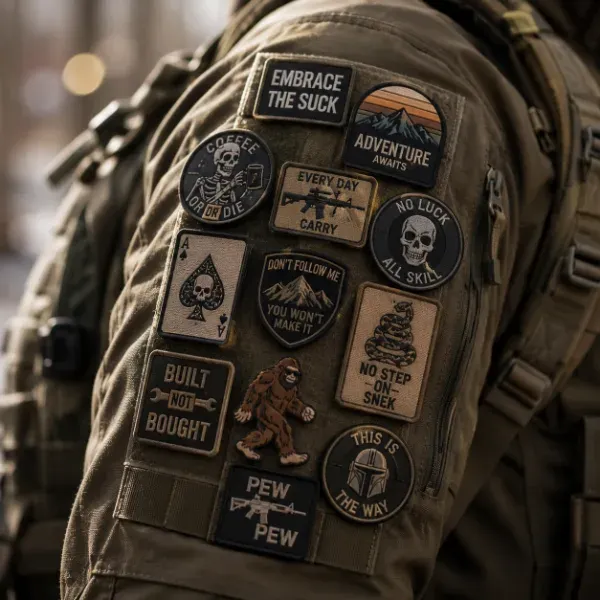
Not every patch on a jacket is official. A morale patch or novelty patch is common in some units and among collectors, but it’s not authorized insignia. A deployment patch might mark a specific mission and mean a lot to the person who wore it, even without official status. A tactical patch falls into this same unofficial-but-meaningful category for a lot of buyers.
Ready to put your unit’s design into production? Get a free quote and see a digital proof first.
Collecting, Value, and Getting It Right
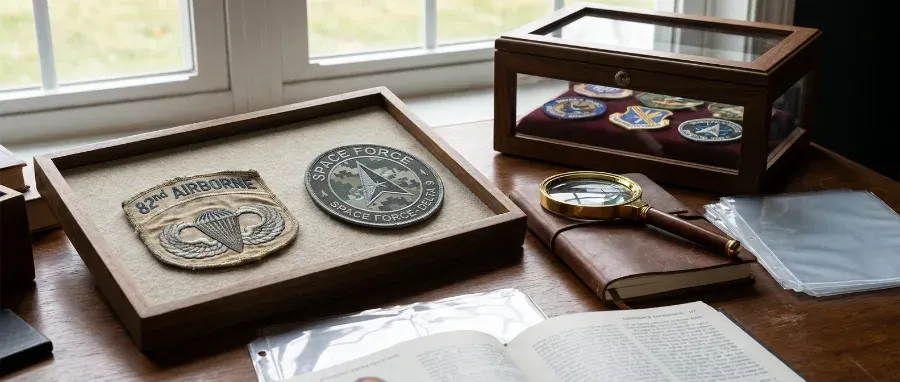
Militaria collectors know that custom patches vary a lot in patch value. Common modern patches often sell for just a few dollars, while rare WWII-era originals with solid provenance can run into the thousands.
Whether someone’s collecting an old patch or ordering a new one, accuracy still matters. The Monterey Company offers a wide product range under one roof, backed by hands-on service from real people who work with the military on their custom patch orders every day. The goal is always products that feel more special than generic swag, built on experience across many buyer types and industries.
That shows up as low minimums compared to many custom suppliers, a balance of quality and service, not just low price, and reorder support and consistency for units that come back next year. It’s guidance for buyers who are not sure what they need yet, and unique product customization depth for units that already know exactly what they want. For collectors and units interested in other commemorative pieces, custom challenge coins work in a similar way, marking service and history in a different format.

Eric Turney
Eric Turney A devoted father, football fanatic, and stand-up comedy enthusiast who loves nothing more than bringing people together over great food and a good time. When he’s not cheering on his favorite team or experimenting in the kitchen, you can find him connecting with others on LinkedIn

 Coins & Medals
 Corporate Gifting & Events
 Custom Labels & Accessories
 Everything Keychains
 Headwear
 Holidays