














































































PVC vs Silicone: A Complete Comparison Guide


Key Takeaways
- ‣ PVC patches cost less and hold sharp, colorful detail, while silicone patches flex and resist heat better.
- ‣ Polyvinyl chloride is a thermoplastic, and silicone rubber is a polysiloxane elastomer, so they behave differently under stress.
- ‣ Silicone patches offer stronger UV resistance, ozone resistance, and thermal stability for outdoor or uniform use.
- ‣ The Monterey Company has produced custom patches since 1989, backed by 1,000+ five star reviews.
Ready to design your own patch? Get a free custom patch quote and see samples before you buy.
PVC vs Silicone Patches: What’s the Real Difference?
If you’re comparing PVC and silicone patches, the short answer is that PVC costs less and holds sharper detail, while silicone flexes more and handles heat and sun exposure better. Both materials appear throughout the promotional products world, but they come from very different chemical families, and that difference is evident the moment you touch the finished patch.



What Is PVC Patch Material?
PVC stands for polyvinyl chloride, a thermoplastic that starts out as a plain white powder. Manufacturers add a plasticizer to turn that stiff powder into flexible PVC, which gives custom PVC patches their smooth, rubbery feel and raised, colorful design lines. The base ingredient is vinyl chloride monomer, which gets polymerized into the plastic form we actually use.
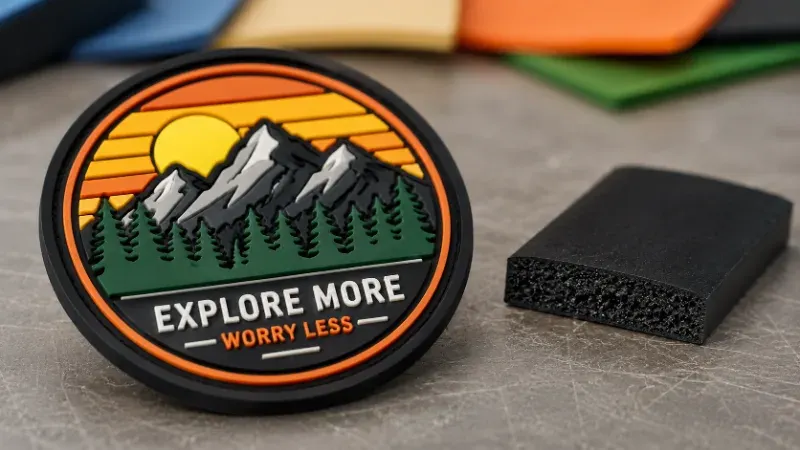
What Is Silicone Patch Material?
Silicone works differently. It is built from silicon, one of the most common elements on Earth, bonded with oxygen in a chain called siloxane. String enough of those chains together and you get polysiloxane, better known as silicone rubber. Chemists sometimes describe silicone rubber as a synthetic rubber or an elastomer, and a silane coupling agent is often added during production to help silicone resin bond properly to the patch backing.

How PVC and Silicone Patches Get Made
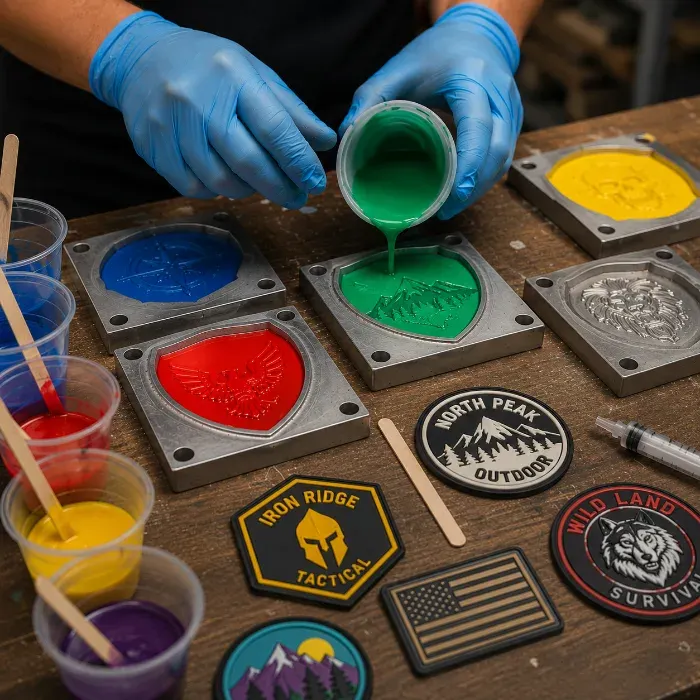
The manufacturing process is where these two materials really split apart. PVC patches are usually formed through injection molding, where melted PVC gets pressed into a metal mold that holds your design.
Silicone patches take a bit more finesse. Manufacturers often use liquid silicone rubber, sometimes abbreviated as LSR, in transfer or compression molding processes. Some silicone patches also cure through an HTV (high-temperature vulcanization) step. I think this extra step is part of why silicone patches usually cost a little more to produce than PVC.
Durability, Flexibility, and Everyday Performance
Temperature Resistance and Thermal Stability
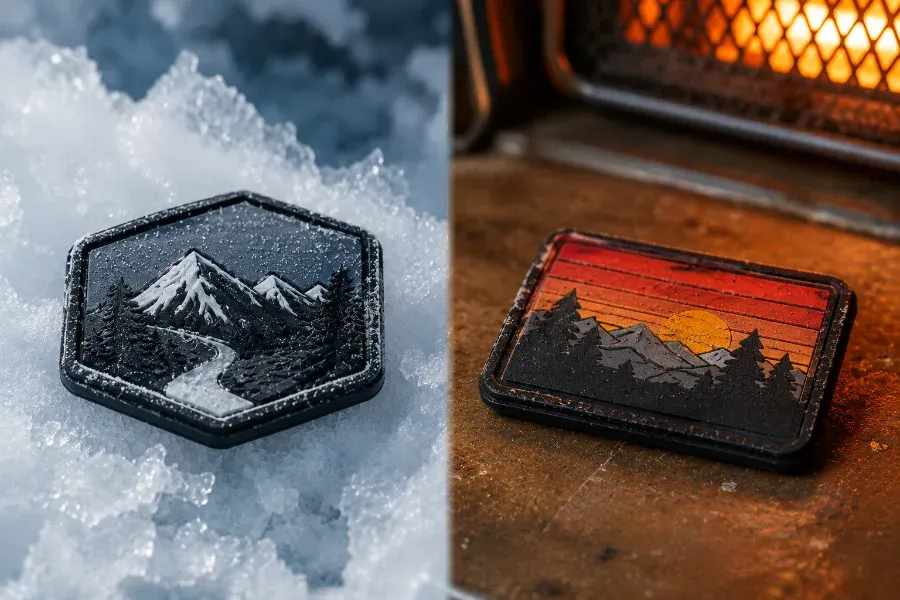
Silicone wins on temperature resistance, and it is not close. Its thermal stability holds up in extreme heat and extreme cold, and it has a much lower glass transition temperature than PVC, meaning it stays flexible even when things get frosty. PVC has decent thermal conductivity for a plastic, but it can turn brittle in a walk-in freezer or crack under repeated thermal shock resistance testing, something silicone shrugs off.
Flexibility, Tensile Strength, and Mechanical Strength
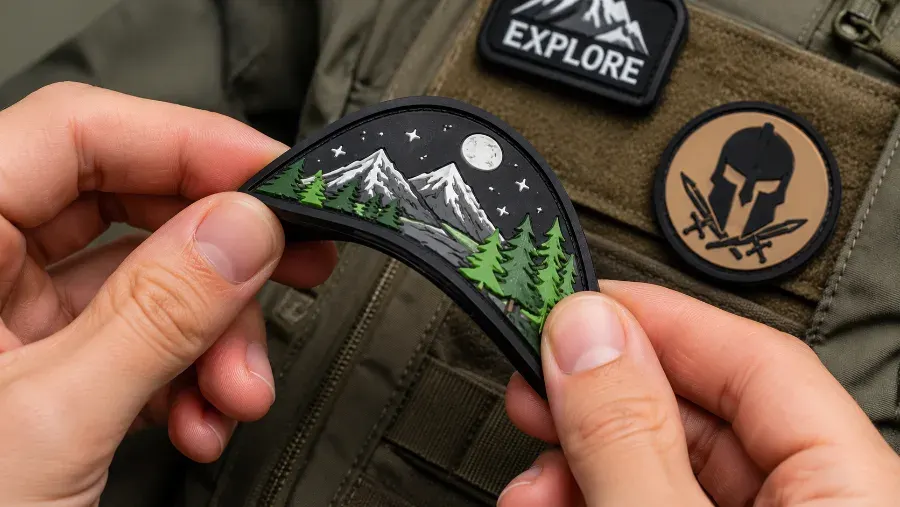
PVC patches are flexible enough for everyday use, but silicone is the more forgiving of the two. Silicone offers better tensile strength and mechanical strength under stretching and bending, plus stronger compression resistance and abrasion resistance for patches worn hard on jackets, bags, or uniforms. PVC’s density gives it a satisfying, weighty feel, though, and some customers actually prefer that.
Weather, UV, and Chemical Resistance
Silicone naturally resists ozone and holds up to years of UV light without cracking, which is why it is the better pick for anything living outdoors. PVC has come a long way with UV resistance and weather resistance too, but it can fade or stiffen faster over time. Both materials offer solid chemical resistance against oils, cleaners, and most hydrocarbons, so neither one is a bad choice if chemical exposure is your main worry. Overall, both hold up well thanks to decent environmental adaptability, though silicone still edges ahead outdoors.

Food Grade, Medical Grade, and Safety Standards
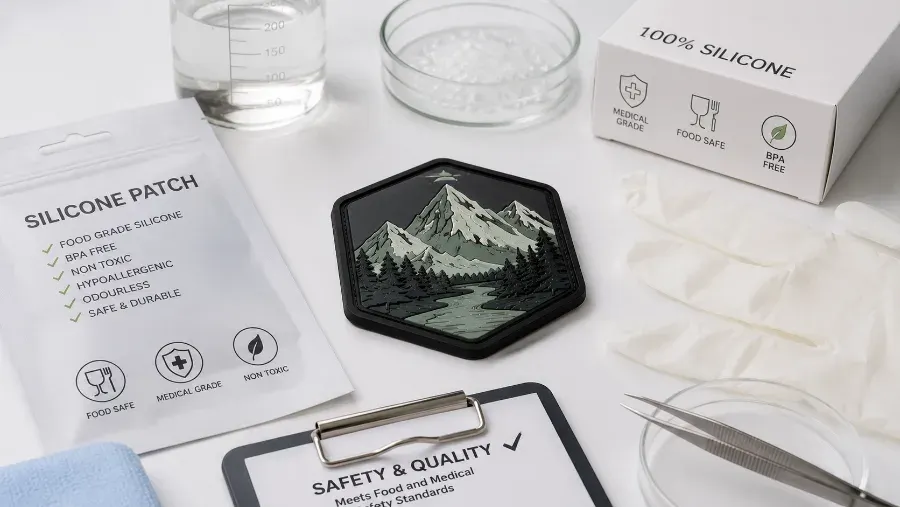
If your patch touches skin, food, or medical equipment, this part matters. Food-grade silicone and medical-grade silicone are both BPA-free, BPS-free, and phthalate-free, which is part of why hospitals and kitchens rely on silicone so heavily. PVC can be manufactured to food grade standards too, but it takes more careful sourcing to keep plasticizers and phthalates out of the mix. Either material can be produced to meet RoHS certification, so ask your manufacturer directly if compliance matters for your project.
Where Else You’ll Find These Materials
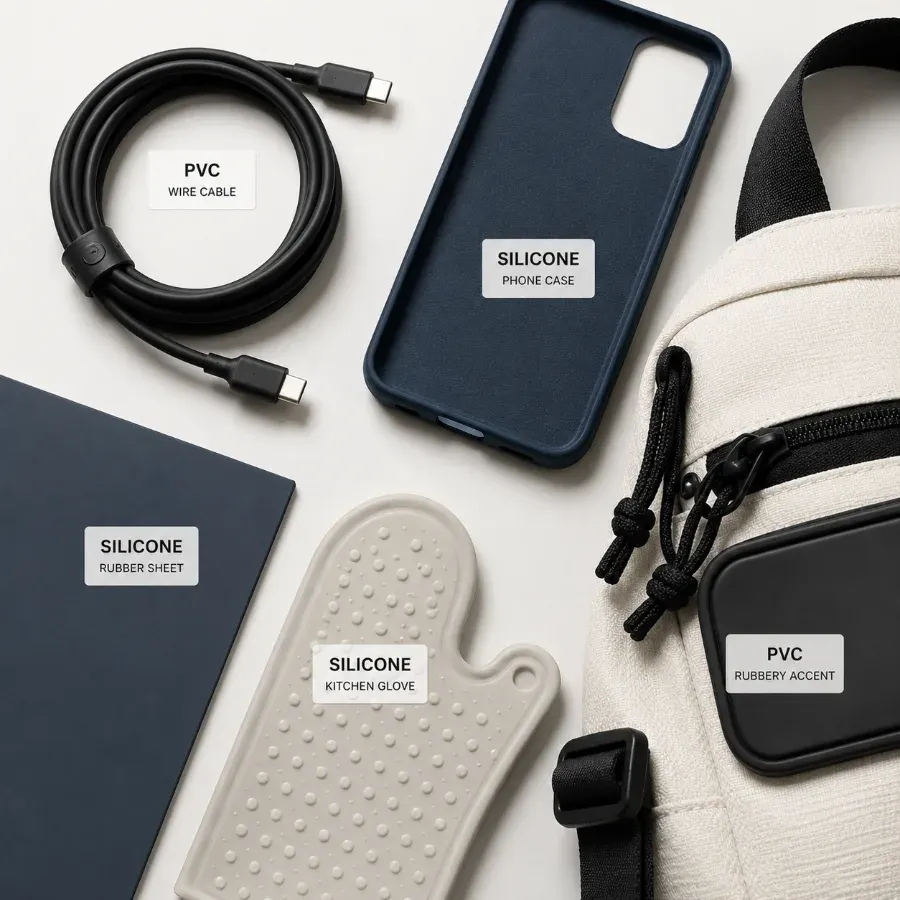
PVC and silicone show up everywhere once you start looking. Silicone wire and PVC wire both use these materials for electrical insulation and wire insulation because of how well they resist heat and hold their shape. You’ll also spot silicone rubber sheet, silicone leather, and polyurethane blends in bags, phone cases, and outdoor gear. These same base materials even turn up in completely unrelated products, like PVC test lead cables and silicone test lead cables used with oscilloscope probes, or banana plugs wired with tinned copper and bare copper conductors. That’s not anything we make here, but it shows just how far these two materials stretch across different industries.
Not sure which material fits your project? Request your free custom quote and our art team will help you decide.
Cost and Which Patch Material Is Right for You
Cost is usually what decides it. PVC patches are cheaper to produce and are the better pick for big orders, indoor uniforms, or promotional giveaways where budget matters most. Silicone costs more upfront, but its durability, flexibility, and temperature resistance make it worth the extra dollars for outdoor gear, medical apparel, or anything that needs to survive years of hard wear.
To recap, durability, flexibility, and cost are really what this decision comes down to. PVC keeps the manufacturing process simple and affordable, while silicone’s chemical resistance, UV resistance, tensile strength, and abrasion resistance make it the tougher long term option for demanding conditions.
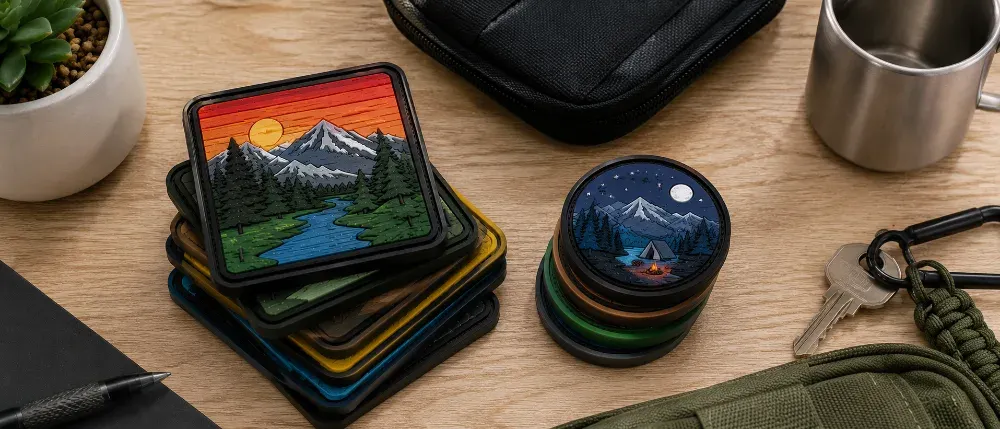
We’ve made both PVC and silicone patches at The Monterey Company since 1989, and honestly, we still get asked which one is better almost every week. There isn’t one right answer. It really depends on where the patch is going and how rough its life is going to be. Whichever material you land on, that consistency matters most for reorder support, since we track it closely so your tenth order matches your first.

Eric Turney
Eric Turney A devoted father, football fanatic, and stand-up comedy enthusiast who loves nothing more than bringing people together over great food and a good time. When he’s not cheering on his favorite team or experimenting in the kitchen, you can find him connecting with others on LinkedIn

 Coins & Medals
 Corporate Gifting & Events
 Custom Labels & Accessories
 Everything Keychains
 Headwear
 Holidays