





































































How to Put Patches on a Jacket (Sew, Iron, or Glue)

Key Takeaways
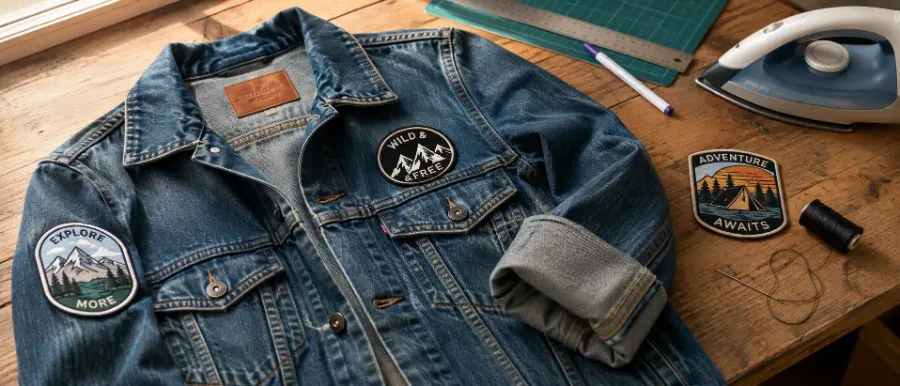
- ‣ Match your attachment method, sew-on, iron-on, or fabric glue, to the jacket fabric before you start.
- ‣ Denim jackets handle custom iron on patches fine, but leather, suede, and suit jackets need sewing instead.
- ‣ Plan your patch placement first, especially for a sleeve patch or a center back design, so nothing shifts once it’s permanent.
- ‣ A few reinforcing stitches around an iron-on patch make the difference between it lasting one wash or fifty.
Ready to get custom patches made for your next jacket project? Get your free quote today and see why hands-on service from real people has earned us over 1,000 five-star reviews.
Choose the Right Attachment Method First
If you’re wondering how to put patches on a jacket without wrecking it, the answer comes down to your fabric and your patch backing. Not the patch design. Not how badly you want it done today.
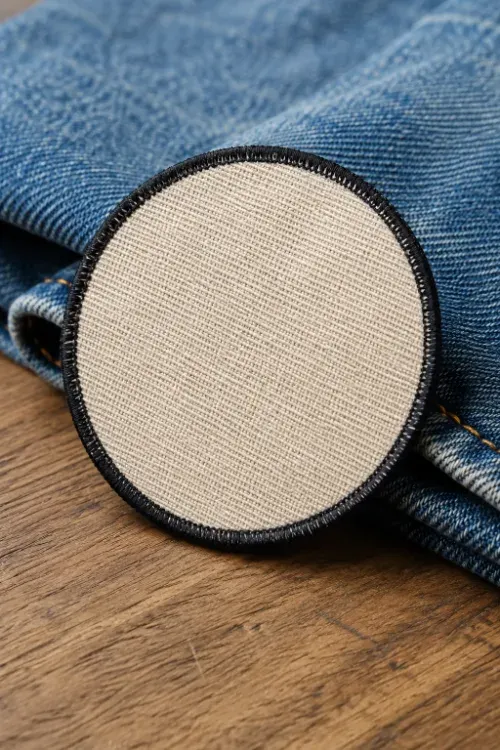
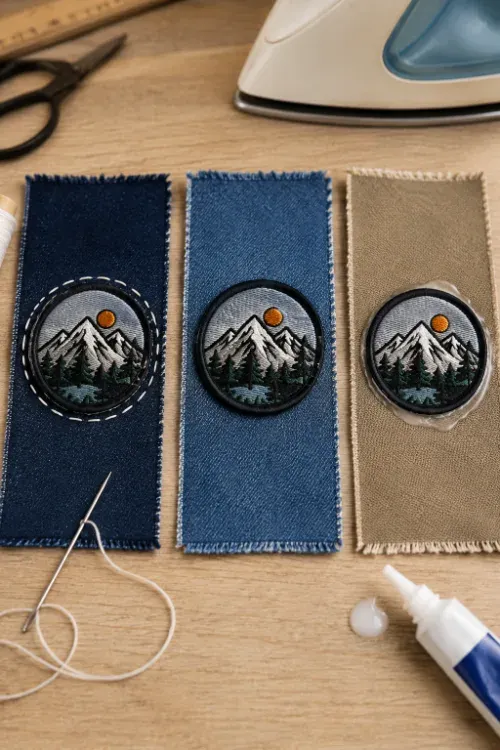
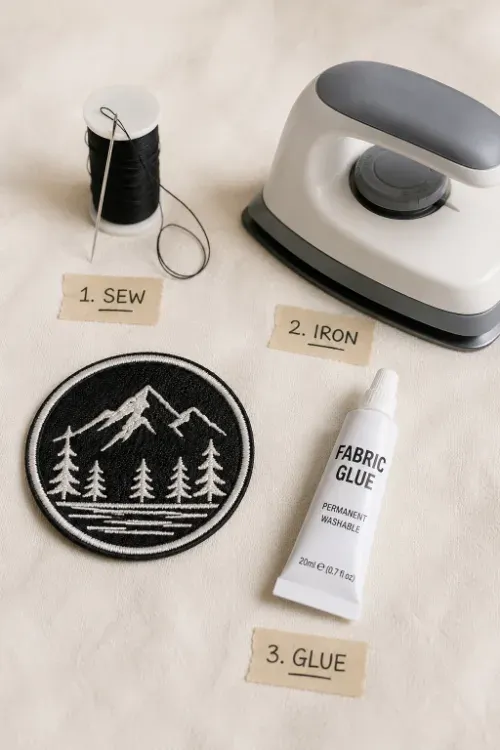
Sew-on patches hold up best through repeated washing. Iron-on patches work fast, but only on heat-safe fabric. Fabric glue is the option for a narrow set of cases, usually when heat isn’t safe and sewing isn’t practical. Temporary attachment is its own category entirely, and we’ll get to that.
Custom logo patches come in a lot of forms these days, and each one behaves a little differently once it hits real fabric.
Sew-On, Iron-On, Glue, and Temporary Options
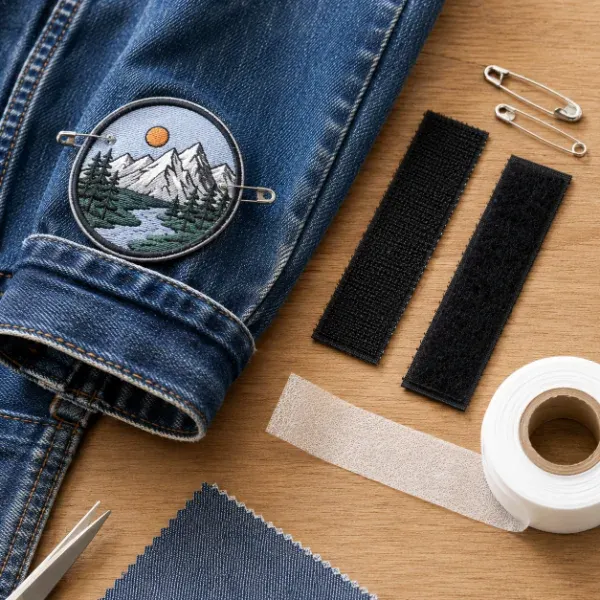
Grab a needle and thread for hand sewing. It gives you the most control, especially near pockets and linings. Fusible hem tape can stabilize a lightweight patch before you stitch, which is a small trick most people never learn.
For anything you don’t want permanent, safety pins or straight pins can hold a layout in place while you decide. A hook-and-loop fastener is the better long-term option for tactical patches, custom sports team patches you’ll swap often, or seasonal displays. Adhesive backing helps in a pinch, but check the manufacturer’s instructions first. Not every adhesive is built for every fabric.
Gather Your Tools and Prep the Jacket
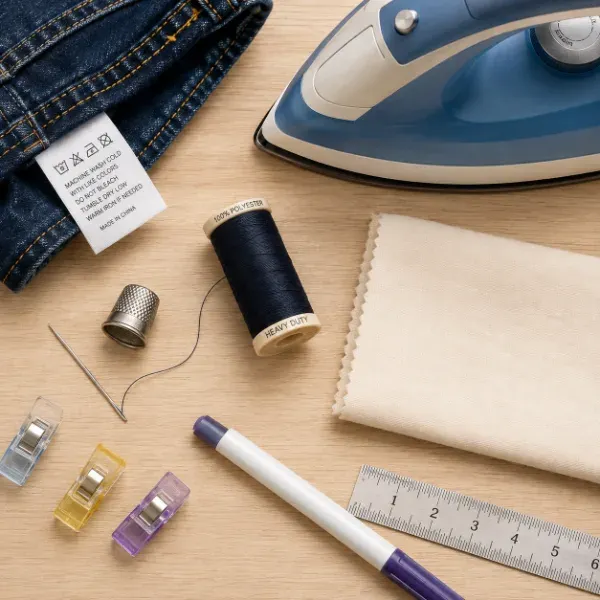
For hand sewing, you’ll want a needle, durable thread, fabric clips, a thimble, and a ruler or fabric marker. Iron-on jobs need an iron, a pressing cloth, and a firm, heat-safe surface to work on. Before you start attaching anything, arrange the patches where you want them and photograph your layout so you have a reference if anything gets moved.
Before ironing anything, wash the jacket without fabric softener. Softener residue is sneaky. It cuts down on adhesive grip, and you won’t know until the patch starts lifting a few washes later. Always check the care label first, especially on anything you didn’t buy specifically for patches.
Plan Patch Placement Before You Commit
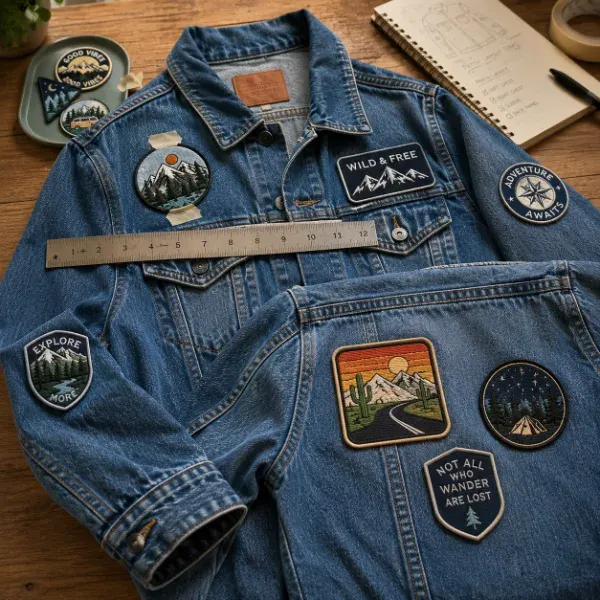
Lay the jacket flat and arrange the whole design before you attach a single patch. Patch placement should reference seams, pockets, and zippers, not just what looks good on a table.
Use a ruler to line up a sleeve patch or a chest emblem. For a center back design, put the jacket on and check it while worn. Shoulders shift things. What looks centered lying flat can look off once a body is inside it.
This is where strong proofing and design guidance actually earns its keep. Photograph your layout, or use low-tack tape to test it, before anything becomes permanent on custom jacket patches you can’t easily redo.
Sew a Patch On by Hand
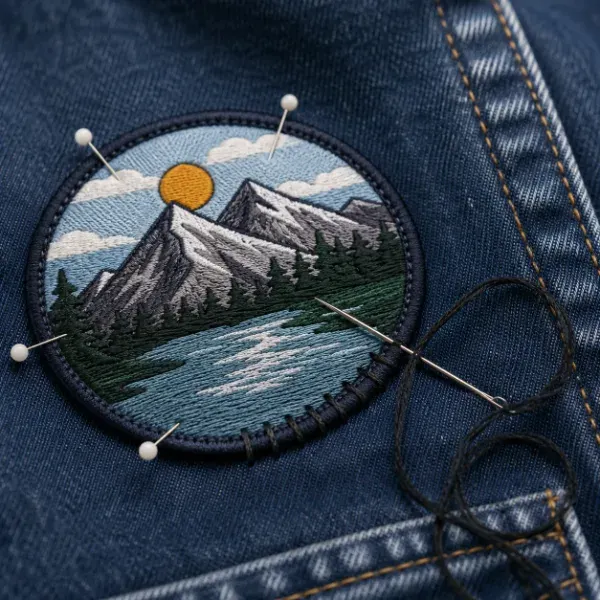
Pin the patch in place, then thread your needle. A whip stitch gives a visible, sturdy edge. A ladder stitch hides better, when the patch border allows it.
Keep your stitches small and evenly spaced. Knot the thread inside the jacket, not outside, and trim the tails clean. A backstitch at the start and finish keeps everything from unraveling later.
Use a Sewing Machine for Flat Fabric
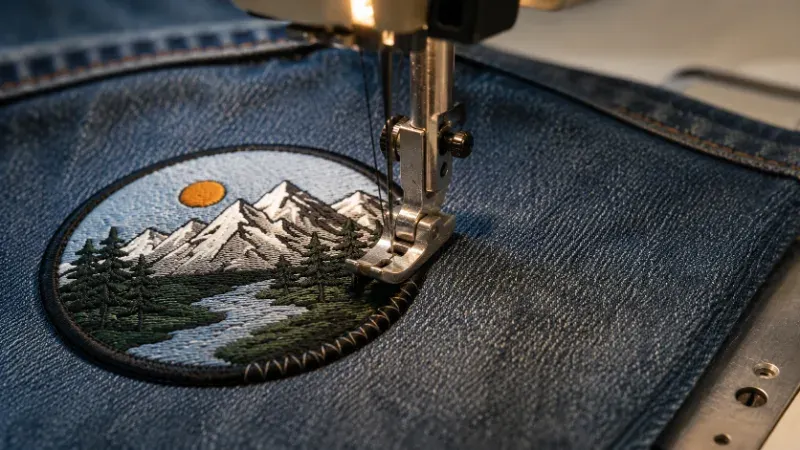
On flat panels, a sewing machine speeds things up. A zigzag stitch catches the patch border well, or use a straight stitch positioned just inside the edge. Go slow around curves, and watch that you’re not accidentally sewing through the jacket lining or a closed pocket.
Apply an Iron-On Patch Safely
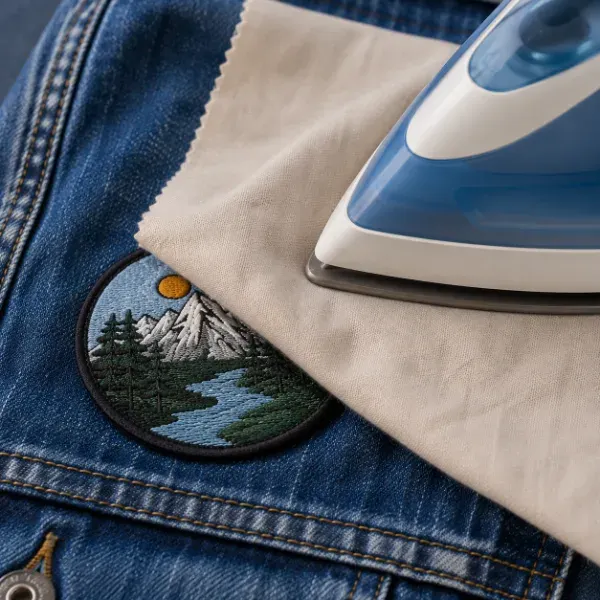
Confirm the patch backing and the fabric can both handle heat before you plug in the iron. Turn off the steam setting unless instructions say otherwise. Preheat to the recommended temperature.
Place the patch, cover it with a pressing cloth, and press down firmly without sliding. Sliding shifts the design and can uneven out the adhesive backing underneath. Let it cool fully before you test the edges. If the jacket gets washed often, stitch around the border anyway. It’s a small step that adds a lot of hold.
Special Fabrics Need Special Care
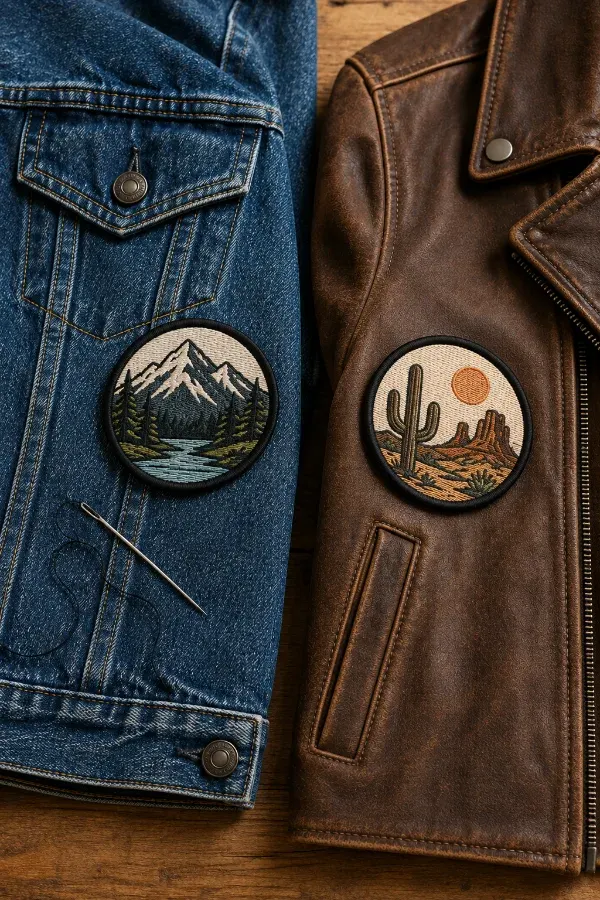
A denim jacket is fairly forgiving for both sewing and ironing, though thick seams sometimes need a stronger needle. A leather jacket or anything in suede is a different story. Heat and needle holes can cause damage you can’t undo, so sewing carefully, or visiting a leather pro, is the safer route.
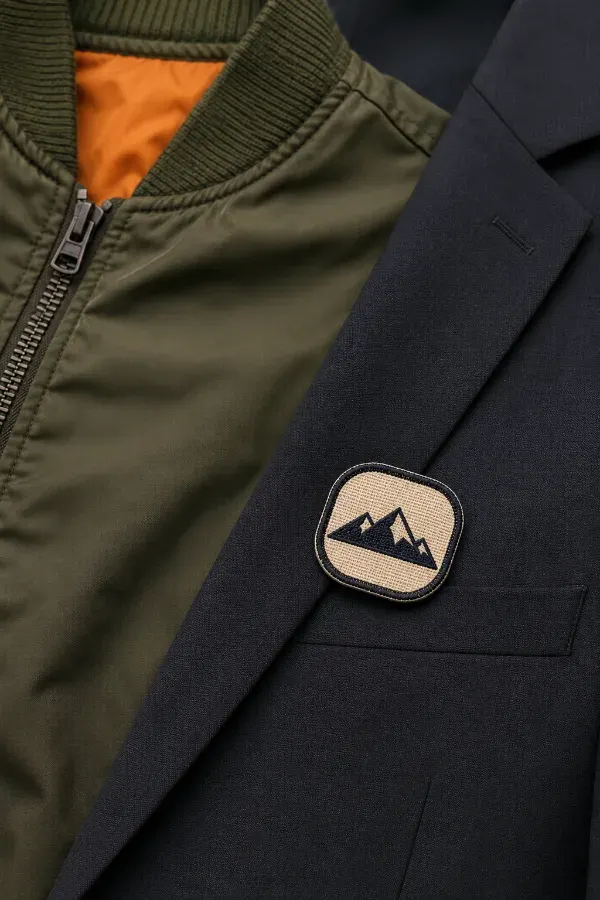
A bomber jacket usually takes either method fine, depending on the outer fabric. A suit jacket really only works with small, removable patches, or a tailor’s help. Permanent glue and iron-on adhesive can mark formal fabric fast.
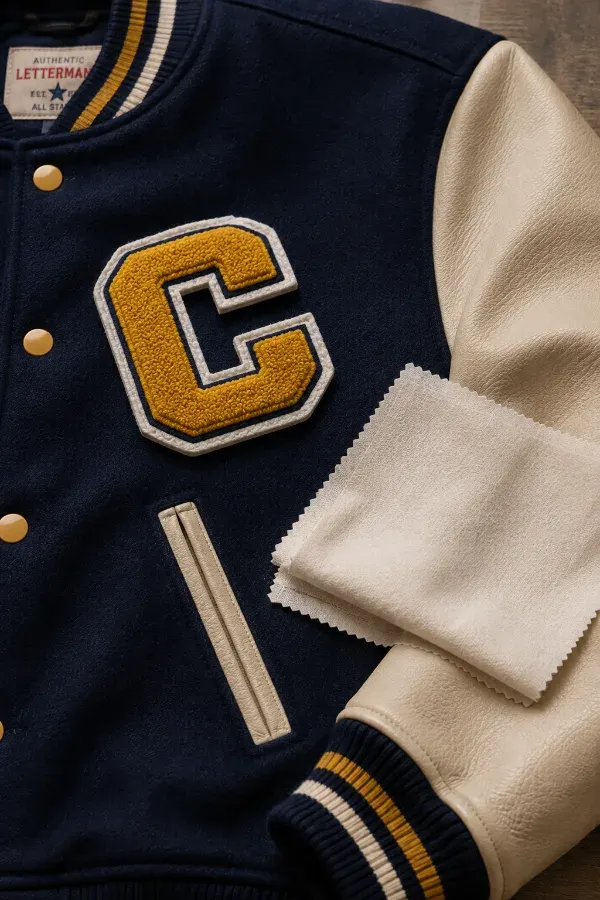
Letterman jackets deserve their own note. Custom patches for letterman jackets are commonly called Chenille patches should never take direct iron heat. Use a pressing cloth, low to medium heat only, and let them air dry. PVC patches, embroidered patches, and woven patches all have their own backing quirks too, so when in doubt, sew instead of guess.
Not sure which patch backing fits your jacket? Talk to our team and get a free proof before you commit to anything permanent.
Care for a Patched Jacket
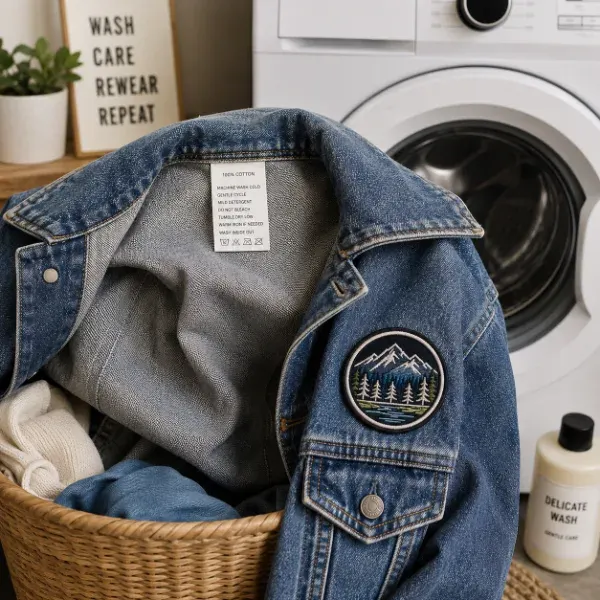
Once the patch is on, check the care label again before your first wash. Turn the jacket inside out, use a gentle cycle, and skip the dryer’s high heat if you can. Cold water and air drying protect iron-on adhesive a lot longer than people expect.
Inspect the edges after each wash. Loose threads are easy to fix early and a real pain once a patch is half hanging off.
We’ve been helping people get this right for over 35 years, with a wide product range under one roof so you’re not piecing your order together from five different suppliers. Whether it’s one patch or a hundred for a team jacket, the same attention to placement and backing applies either way.

Eric Turney
Eric Turney A devoted father, football fanatic, and stand-up comedy enthusiast who loves nothing more than bringing people together over great food and a good time. When he’s not cheering on his favorite team or experimenting in the kitchen, you can find him connecting with others on LinkedIn

 Coins & Medals
 Corporate Gifting & Events
 Custom Labels & Accessories
 Everything Keychains
 Headwear
 Holidays