


















































How To Iron On Patches On Backpack: A Step-By-Step Guide

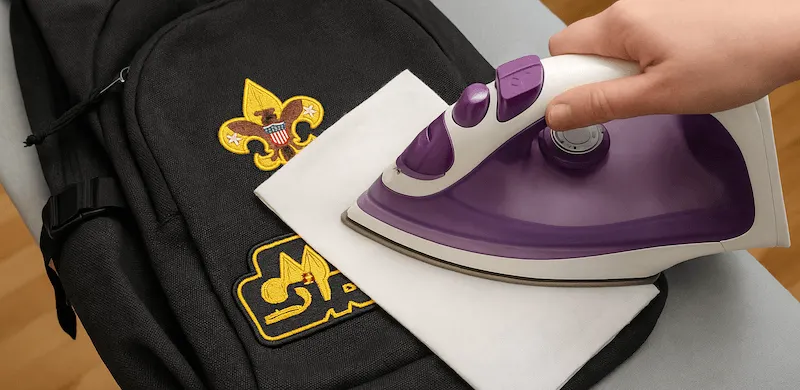
How to iron-on patches on a backpack is simple when you use the right heat, pressure, and preparation. This step-by-step guide shows you the proper method so your patch stays flat and firmly attached.
Key Takeaways
- ‣ Make sure to use patches with iron-on backing and use the correct heat settings. This keeps the patch stuck to your backpack for years, not weeks.
- ‣ Canvas backpacks take heat easily, but polyester and nylon need a pressing cloth and lower heat to avoid melting.
- ‣ Sewing, fabric glue, and Velcro patches are the best backups when a backpack’s fabric can’t handle an iron.
- ‣ Patch size, patch design, and patch placement all affect how long a patch survives daily wear on a backpack.
Ready to design your own iron-on patch? Get a free custom patch quote and see your idea come to life.
What Iron-On Patch Style Works Best On A Backpack?
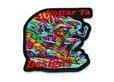
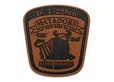
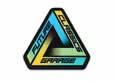
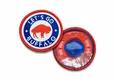
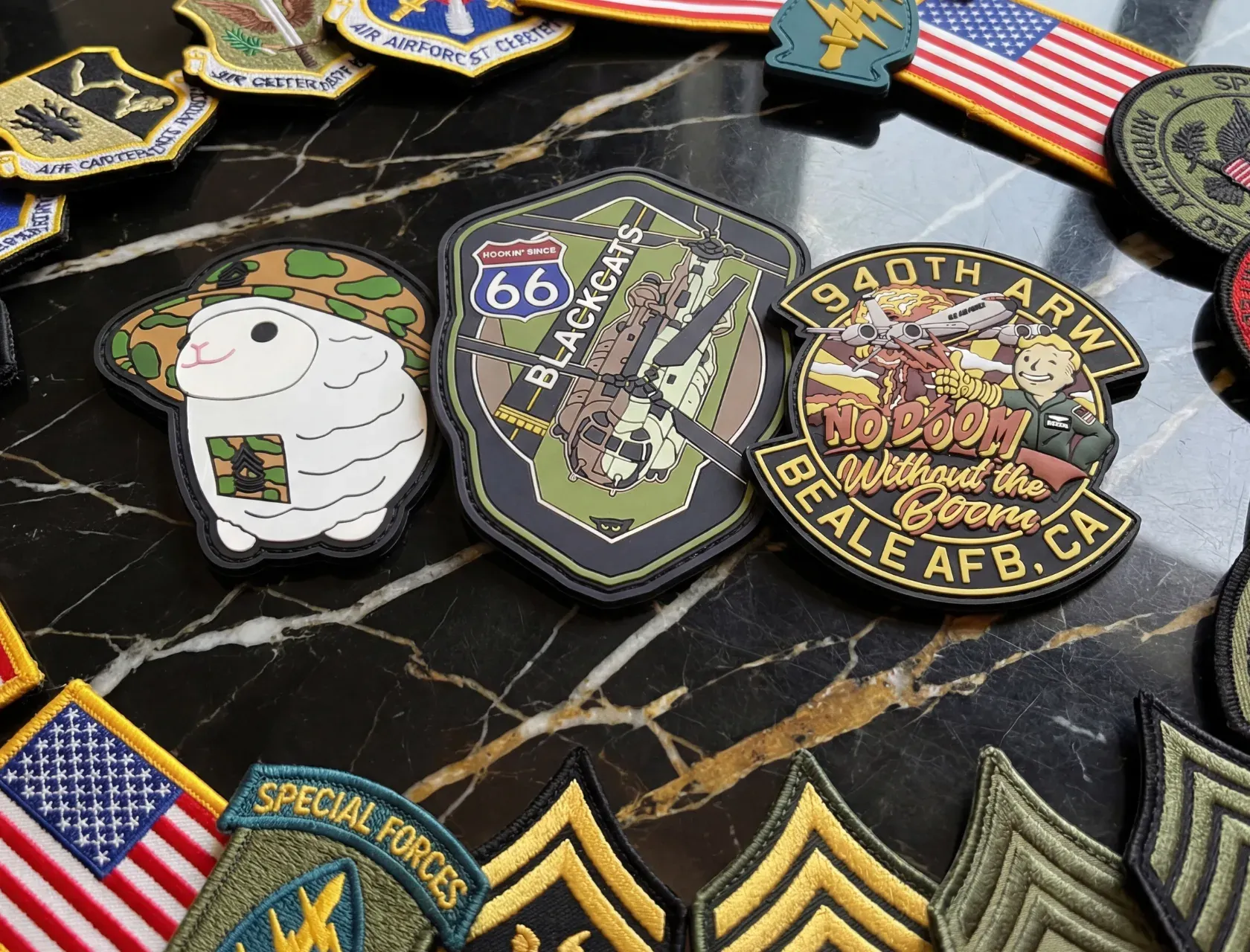
Iron-on patches come in a few different styles. Custom embroidered patches have that classic raised stitching. Woven patches sit flatter and pack in more detail. Printed patches (dye-sublimated) use full color designs, and chenille patches bring that fuzzy, varsity jacket look. Some of these ship with adhesive backing built in, but for a backpack that gets tossed around daily, we usually recommend true iron-on backing over adhesive alone.
Not sure which patch backing fits your project? That’s worth asking before you ever plug in an iron. Our patch types guide breaks down every backing side by side, including PVC patches if you want something with more of a rubbery, 3D feel.


Check Fabric Compatibility Before You Plug In That Iron
✅ Canvas Backpacks
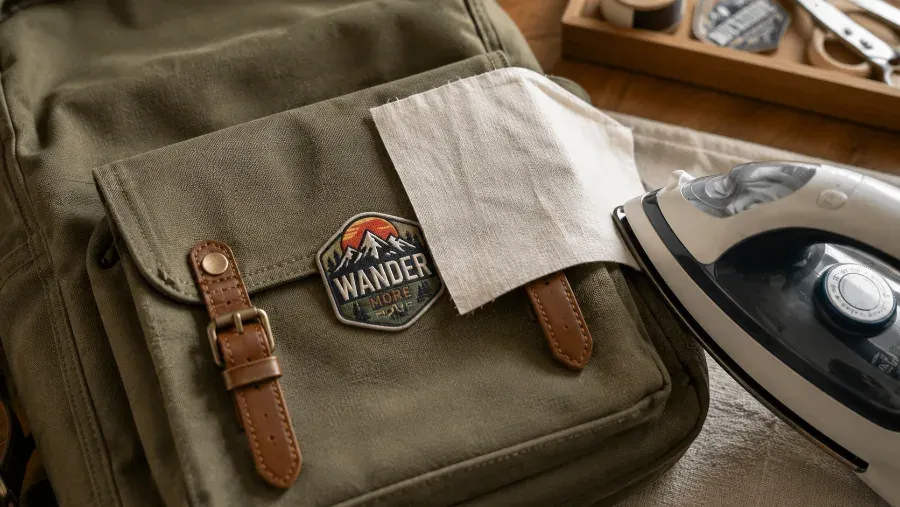
Canvas and cotton backpacks are the forgiving ones here. They handle higher heat settings without much drama, which makes them the easiest fabric for an iron-on patch. My favorite backpack is a canvas bag from Eiken that has lasted for years. It is covered with patches I have collected from different vacations and travel spots, and each patch irons on incredibly easily.
✅ Polyester Backpacks
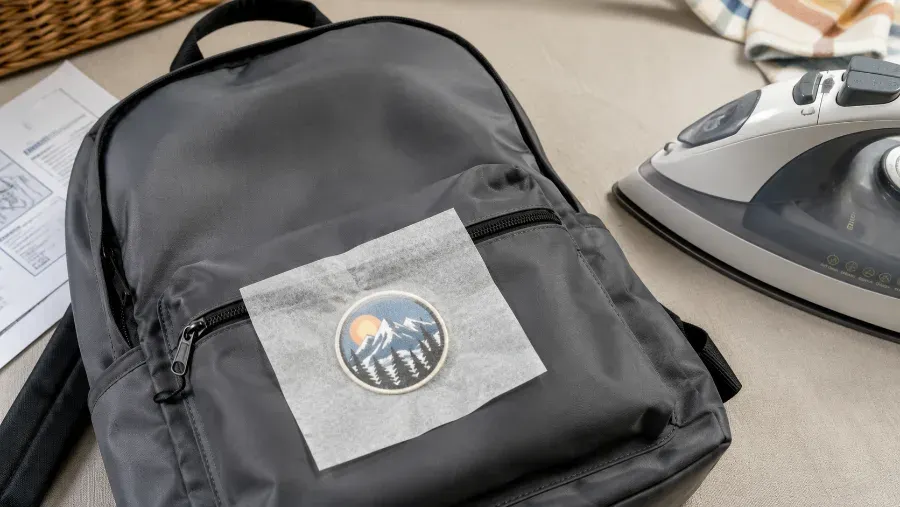
Polyester backpacks can take an iron too, just at a slightly lower heat setting, and always with a pressing cloth between the iron and the fabric. Most JanSport backpacks are made from 600-denier polyester or 915-denier Cordura nylon, both of which can handle the heat needed to iron on a patch. You should have no issues with either material.
⚠️ Nylon Backpacks
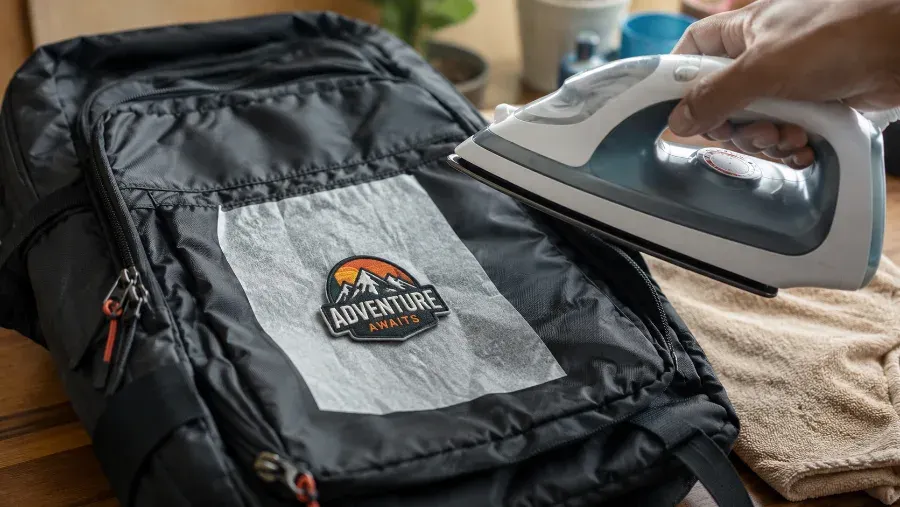
Nylon is the one to watch. It’s heat-sensitive and can melt or warp if your iron runs too hot. Use the lowest heat setting that still activates the patch, and never skip the pressing cloth. If your bag feels thin or slick to the touch, that’s nylon, and it deserves extra caution. Checking fabric compatibility before you start saves you from a ruined bag later.
How to Iron On Patches On Backpack, Step By Step
Pick The Right Heat Setting
Start on medium heat, no steam. Press for about 30 seconds, check the patch edges, then add more time if the adhesive backing hasn’t melted in yet. Every fabric behaves differently, so this step is really about patience more than power.
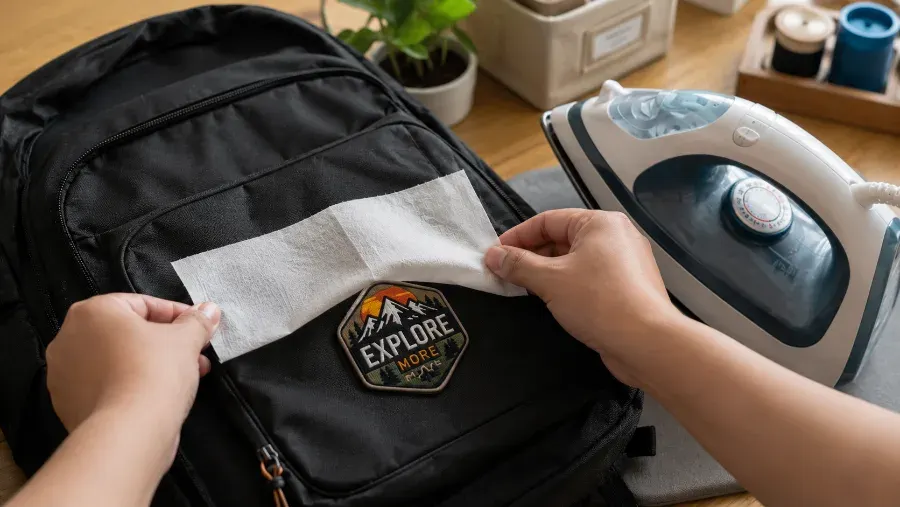
Always Use A Pressing Cloth
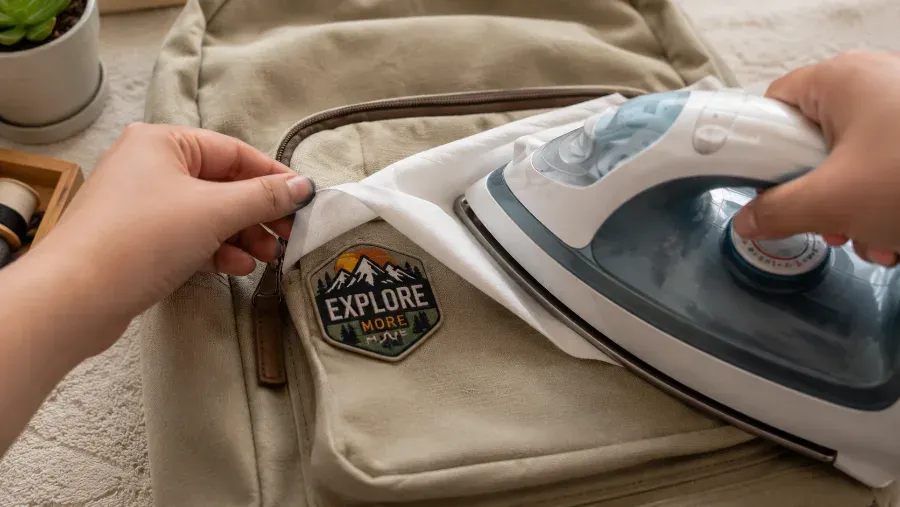
Lay a thin pressing cloth or piece of rubber over the patch before you press down. It protects the patch and the backpack from scorch marks and keeps heat distributed evenly. Skip this step, and you’re gambling with shiny burn marks on a bag you actually like.
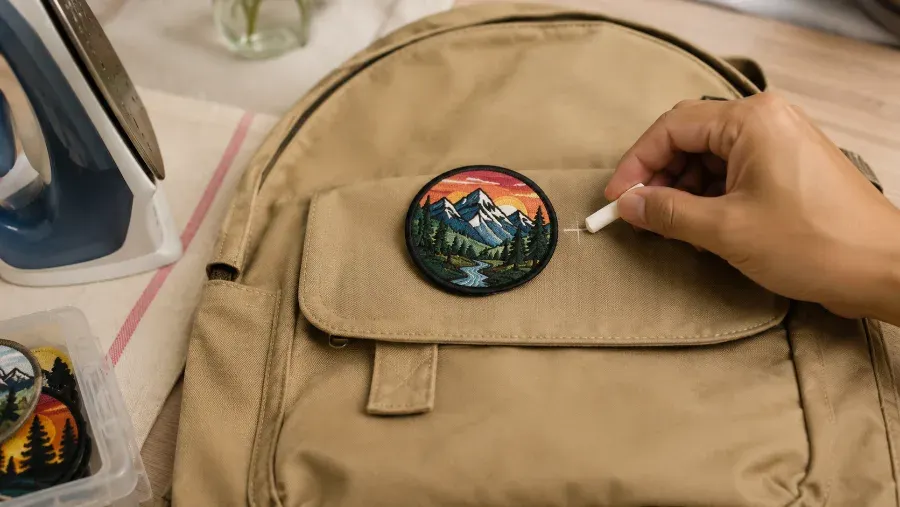
Nail Patch Placement First
Decide on patch placement before you touch the iron to anything. Lay the patch where you want it, step back, check it looks right, then mark the spot lightly with chalk. Ironing on a patch is permanent enough that a few extra seconds of planning is worth it.
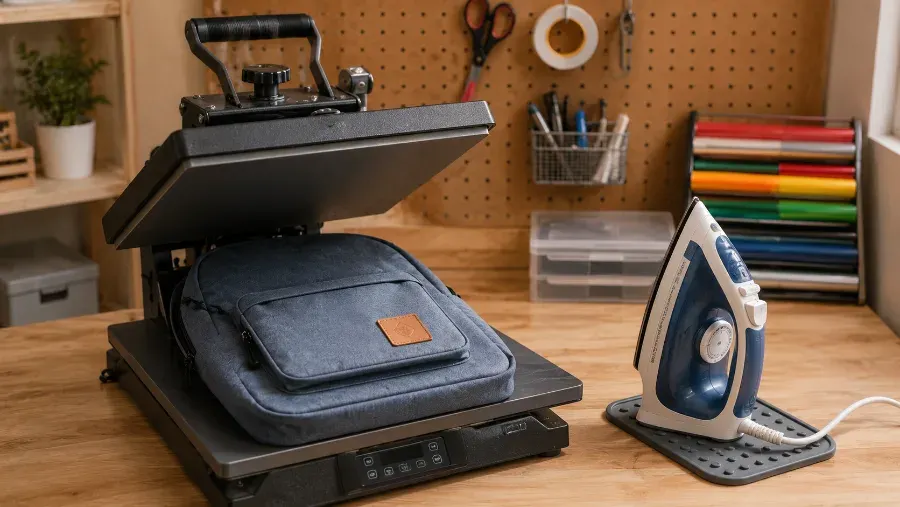
When A Heat Press Beats A Home Iron
A home iron works fine for one patch here and there. But if you’re doing several patches at once, or a patch bigger than your palm, a heat press gives you steadier pressure and more even heat all the way to the edges, not just in the center where a home iron naturally presses hardest.
What If Your Backpack Can’t Handle Heat At All?
Sewing Patches On
Sewing is the most durable option, full stop. A simple running stitch around the patch edge holds up through backpacking trips, washing machines, and years of daily use. It takes longer than ironing, but nothing beats it for patch durability.

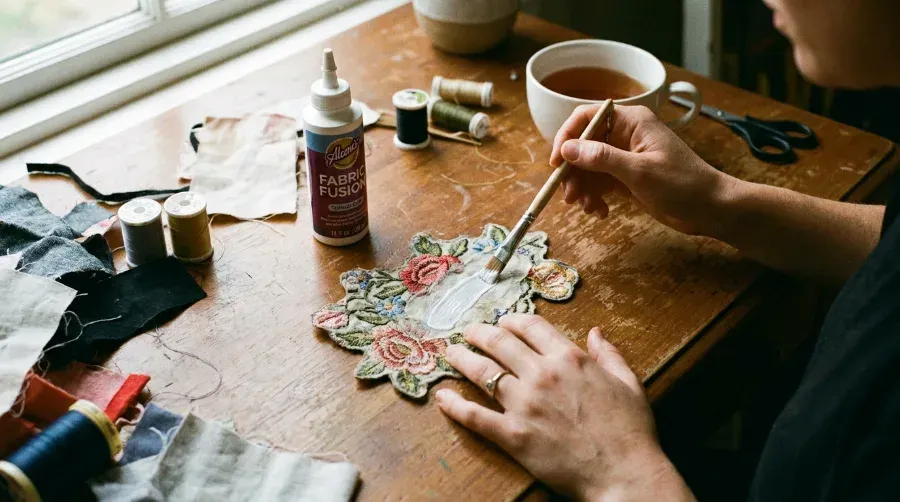
Fabric Glue For A No-Heat Fix
Fabric glue works when you can’t sew and can’t apply heat. Spread a thin, even layer on the back of the patch, press firmly, then let it cure for a full 24 hours before you touch it again.
Velcro Patches For Easy Swapping
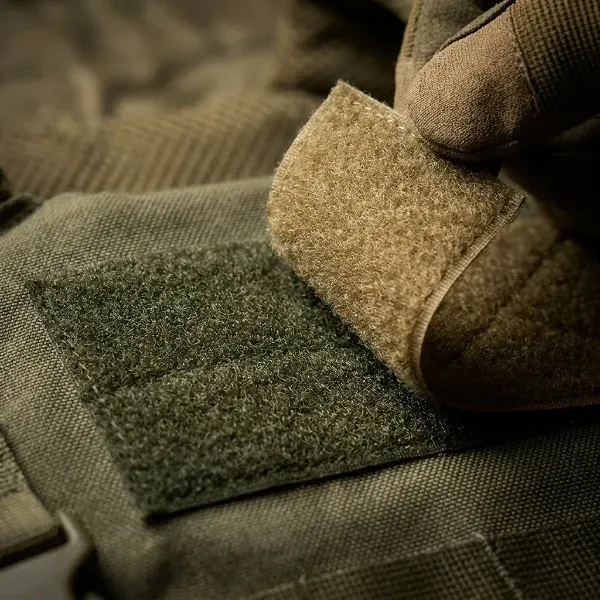
Velcro patches, also called hook and loop, let you change designs whenever you feel like it. Sew or glue the loop side to your backpack once, and every patch after that just presses on and peels off, no adhesive or heat required.
Patch Size And Patch Design Change How It Wears
Patch size and patch design both affect how a patch holds up over time. A big patch on a small pocket flap is going to catch on things and peel faster. A patch design with sharp corners wears at those corners first. When you’re planning your own, think about where the patch actually sits on the bag, not just what looks good on a screen.
For patch durability, always wash a backpack with patches inside out, in cold water, on a gentle cycle. Heat and harsh detergent are the two things that fade a patch fastest, whether it’s ironed, sewn, or glued on.
Want a patch that actually survives backpack life? Start your free custom patch proof and we’ll help you pick the right backing.
Why People Choose The Monterey Company For Custom Patches
We’ve been making custom patches since 1989, and we’ve picked up more than 1,000 five-star reviews along the way, mostly from people who just wanted a patch that didn’t fall apart after one wash. We offer embroidered, woven, printed, chenille, and Velcro patches, a wide product range under one roof, so you’re not chasing down five different suppliers for one project.
Every order gets hands-on service from real people, not a chatbot guessing at your file. Our in-house art team gives you strong proofing and design guidance before anything goes into production, and our minimums stay low compared to many custom suppliers, so a small batch for your scout troop or your work team doesn’t feel like a hassle.


We’ve built up experience across many buyer types and industries, from scout troops ordering ten patches to companies ordering thousands for a launch event. That’s taught us to focus on a balance of quality and service, not just low price, plus reorder support and consistency, so this year’s batch matches last year’s. And if you’re not sure what you need yet, guidance for buyers who are not sure what they need yet is basically half our job.
Our product customization depth and B2B-friendly service for larger group orders make it easy to outfit a whole team or troop at once, and it all adds up to a brand image that feels established and trustworthy. If patches aren’t quite what you need, our custom pins might be a better fit.
These are products that feel more special than generic swag, meant to be kept, worn, used, or displayed, not tossed in a drawer. Now that you know how to iron on patches on a backpack the right way, all that’s left is picking your design.

Eric Turney
Eric Turney A devoted father, football fanatic, and stand-up comedy enthusiast who loves nothing more than bringing people together over great food and a good time. When he’s not cheering on his favorite team or experimenting in the kitchen, you can find him connecting with others on LinkedIn

 Coins & Medals
 Corporate Gifting & Events
 Custom Labels & Accessories
 Everything Keychains
 Headwear
 Holidays