

Motorcycle Club Patch Etiquette: MC Patch Rules Explained


Key Takeaways
- ‣ The three-piece patch (top rocker, center patch, bottom rocker) is reserved for traditional motorcycle clubs that follow strict rules.
- ‣ Custom patches are earned through prospecting, not purchased, and touching another rider’s patches is a serious offense.
- ‣ Most riding groups and non-MC clubs use one-piece or two-piece back patches to avoid territorial conflicts.
- ‣ Proofing your artwork and getting club approval protects your design from cease-and-desist letters and trademark issues.
If you’re planning a custom club patch and want design guidance from a team that has been making them since 1989, request a quote from The Monterey Company and talk through the details.
What Are MC Patch Rules?
MC patch rules are the written and unwritten laws that govern how motorcycle club members design, earn, wear, and respect the patches sewn onto their cuts. They exist because a club patch is more than decoration. It represents identity, rank, territory, and years of commitment to a group. It can take years to earn custom motorcycle club patches.
Breaking those rules, even by accident, can cause real problems at a motorcycle rally or out on the road. Most of the friction comes from newer riders who didn’t know what a patch meant before they put it on.
These rules matter most for traditional motorcycle clubs that use the three-piece patch format. Casual riding groups follow a looser version of the same ideas, but the core principles still apply. Either way, understanding patch etiquette before you design or wear biker patches is simply the right call.
Understanding the Three-Piece Patch
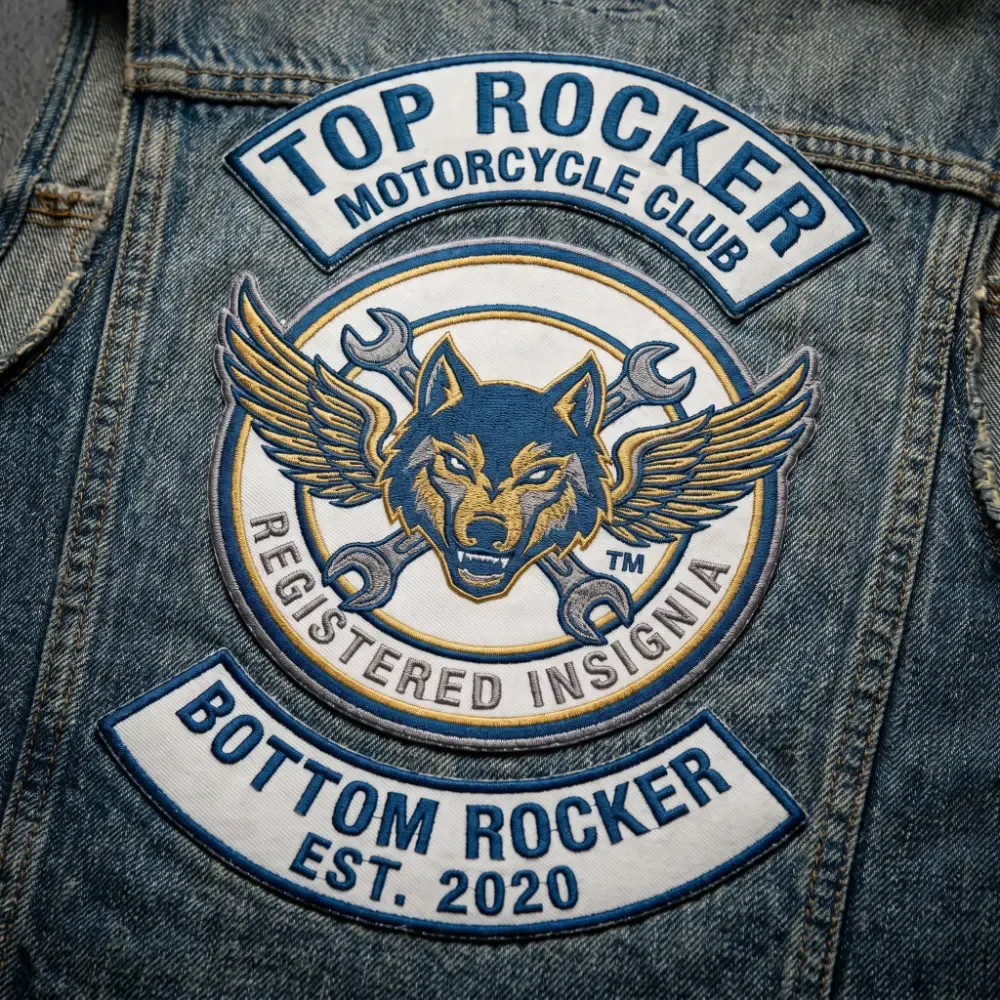
A three-piece patch is the most recognized format in motorcycle club culture. It has three distinct embroidered pieces worn on the back of the cut, which is the sleeveless vest most members wear over their jackets. Each piece carries a specific meaning, and together they form what riders call their colors.
Most traditional clubs use this layout. If you see a full three-piece back patch in the wild, you’re almost certainly looking at a full member of a serious club. That’s why the three-piece patch is so heavily regulated in the community.

Top Rocker
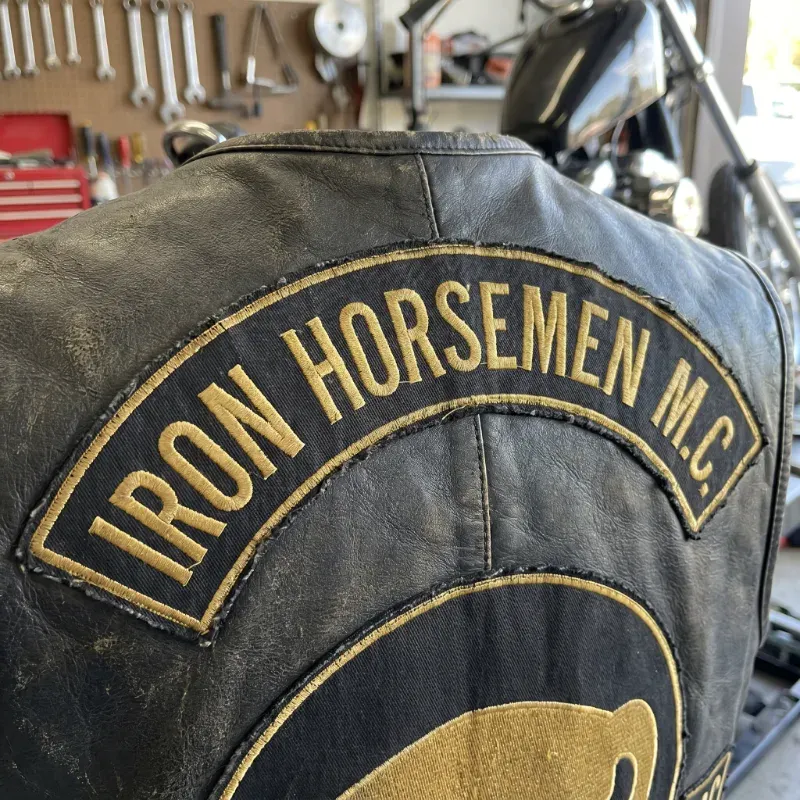
The top rocker sits at the top of the back patch. It usually displays the club name in a curved arc. Font choice, patch wording, and patch shape are all tightly controlled by the club itself, and most clubs have strict internal rules about how the top rocker can appear.
Center Patch (Club Insignia)
The center patch carries the club insignia, which is the primary logo or mascot that represents the club’s identity. It sits between the top and bottom rockers. This is the piece most often registered as a trademark or collective membership mark with the USPTO, making copying it legally risky and culturally disrespectful.
Bottom Rocker
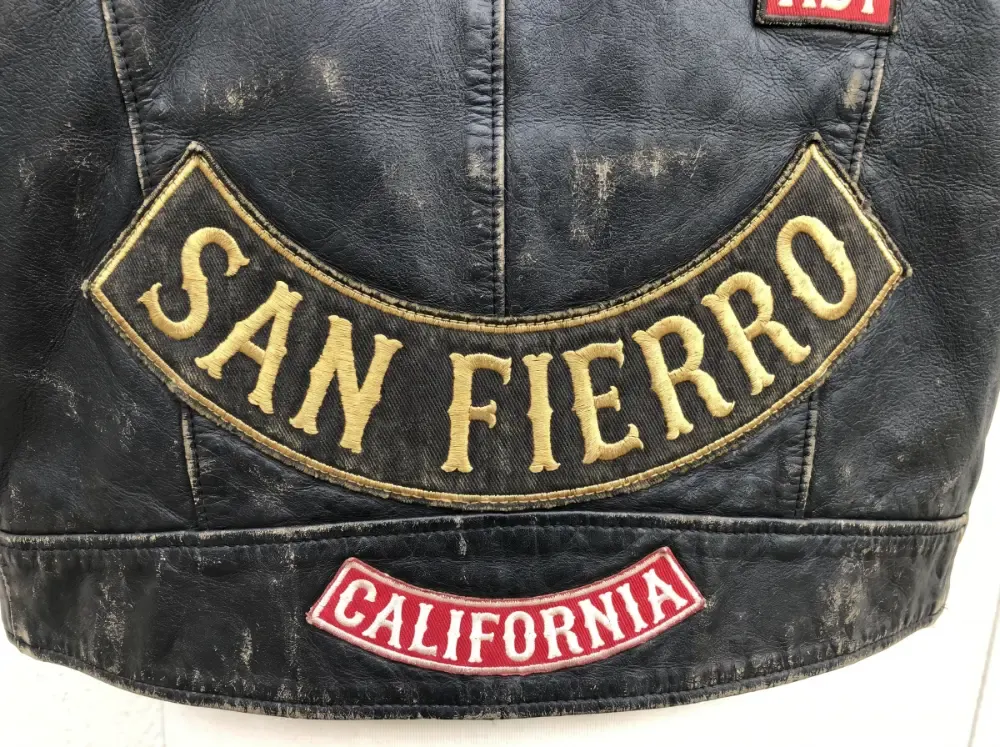
The bottom rocker names the chapter location or territory, usually in another curved arc that mirrors the top. This is where territorial claims get serious. Wearing a bottom rocker for a region that already belongs to another club can start a conflict faster than almost anything else on a cut.
The “MC” Initials and 1% Patch
A small square or diamond patch with the “MC” initials sits next to the center patch. It identifies the group as a motorcycle club in the traditional sense, not just a riding club or social club. The 1% patch, usually a diamond shape, indicates a club that considers itself outside the mainstream rider culture. Both of these carry meaning you do not adopt lightly, and neither should appear on a casual riding group’s cut.
One-Piece and Two-Piece Back Patches
Not every riding group wears a three-piece patch. Many clubs, veterans organizations, and charity groups use a one-piece back patch or a two-piece back patch instead. This is often a deliberate choice to show they are not claiming territory or challenging traditional clubs.
A one-piece back patch is a single embroidered or PVC piece that contains the club’s artwork in one unified design. A two-piece back patch splits into a main logo and a single rocker, but skips the territorial bottom rocker. For most newer groups and casual riding groups, this is the safer format.

The Unwritten Laws of Patch Etiquette
Most of the MC patch rules you need to know are never written down anywhere. They are passed down from experienced riders and reinforced through community expectation. Ignoring them is not a technicality. It’s disrespect.
Don’t Touch Another Rider’s Patches
The first unwritten law most people learn is simple. Don’t touch other rider’s patches. Their cut is personal. Grabbing at it, brushing against it on purpose, or even joking about it can escalate a situation quickly. Asking to look up close is considered rude unless you know the person well.
Colors Are Earned, Not Bought
Club colors are earned, not bought. A prospect rides with the club through their prospecting period before ever wearing a full patch. Once the chapter votes them in as a full member, the rank patch and colors are presented, usually in a formal setting. You can’t just order a three-piece patch online and start wearing it, and anyone who does will be spotted immediately.
Remove Your Patches If Asked
If a senior club member asks a rider to remove your patches, the expectation is that you do it. Arguing rarely ends well. This applies most often when a rider is wearing something that conflicts with a local club’s territorial claims, or when patch placement is wrong for the region you’re riding through.
De-Escalation Is the Goal
Tension at a motorcycle rally is almost always avoidable with basic de-escalation. Keep conversations respectful, don’t wear rockers for territory you don’t belong to, and give space to full members of local clubs. Most issues come from misunderstandings, not malice, which is why a calm tone and a willingness to listen goes further than anything else.
Common Biker Patches and Their Meanings

Beyond the main back patch, riders collect a range of smaller biker patches that each carry their own meaning. Understanding biker patches meaning helps you wear yours correctly and avoid putting something on your cut that you haven’t actually earned.
A rank patch marks leadership roles like president, vice president, sergeant at arms, or road captain. Veteran patches and military patches honor service branches and are common on cuts across many riding communities. A memorial patch remembers a fellow rider who has passed. A charity ride patch commemorates a specific event, and a support patch shows respect for an allied club without claiming membership in it.
Trademark, Trade Dress, and Avoiding Legal Trouble
Here’s where a lot of new clubs run into trouble. The biggest names in motorcycle club culture have registered trademarks and trade dress protection on their patch design, including patch wording, patch shape, and color combinations. Using anything that looks too close to their artwork can result in a cease-and-desist letter, even if you didn’t mean to copy anyone.
Before you finalize any patch design, check your artwork against known club insignia in your region. If your club is new, consider registering your own collective membership mark to protect the design going forward. Proofing your artwork with an experienced manufacturer catches most issues before production runs start.
Choosing Your Patch Style and Materials
Not every patch has to be a traditional embroidered patch, but most motorcycle vest patches still are. The material you pick affects durability, feel, and how the patch looks after a few seasons of weather and road miles.
Embroidered, PVC, Woven, and Leather Patches
An embroidered patch is the classic choice, with stitched threads on a twill backing. Custom PVC patches are flexible rubber-style patches that resist rain and fading, which some riders prefer for outdoor wear. A woven patch uses thinner threads for very fine detail, which works better on smaller logos. A leather patch with laser-etched or debossed artwork has a unique look that pairs well with a leather cut.
Merrowed Borders and Other Patch Borders
Patch borders matter more than people expect. A merrowed border is the thick, rounded edge you see on most traditional club patches, and it’s what gives them that classic finished look. Flat borders and laser-cut edges work for custom shapes that a merrowed border can’t follow. Your choice affects both durability and the overall feel of the finished patch.

Getting Club Approval on Your Patch Design
Before any patch goes into production, the design should pass through your chapter’s club approval process. Most clubs require a formal vote or officer sign-off on any new artwork. This protects the club’s visual identity and keeps everyone on the same page about patch placement, patch wording, and material choice.
A good manufacturer will support this process with design guidance, sample proofs, and revisions before you commit to a production run. At the Monterey Company, we’ve been making custom patch designs since 1989 and have helped thousands of chapters bring their artwork to life without stepping on anyone else’s territory. Pair that with basic motorcycle safety tips at rallies and a respectful approach to patch etiquette, and you’ll find most of the riding community welcomes new clubs who do it right.
Ready to design your club patch the right way? Request a quote from The Monterey Company and our team will walk you through proofing, artwork approval, and production from start to finish.

Eric Turney
Eric Turney A devoted father, football fanatic, and stand-up comedy enthusiast who loves nothing more than bringing people together over great food and a good time. When he’s not cheering on his favorite team or experimenting in the kitchen, you can find him connecting with others on LinkedIn

 Coins & Medals
 Corporate Gifting & Events
 Custom Labels & Accessories
 Everything Keychains
 Headwear
 Holidays