




How to Attach a Phone Charm to Any Case

Key Takeaways
・The right attachment method for a phone charm depends on your case type, not the charm itself.
・A lanyard hole or lanyard loop gives you the most reliable attachment point on any case.
・Hole-free cases can use a charging port insert or an adhesive charm tab instead.
・Always run a pull test before daily use to catch weak knots or loose hardware early.
Want custom phone charms that catch attention and are remembered? Get a free quote from The Monterey Company, and our team will walk you through every option.
How to Attach a Phone Charm (Start Here)
Choosing how to attach custom phone charms to cell phones starts with one question: what kind of case opening are you working with? A lanyard hole, a side opening like a mute switch cutout, a charging port opening at the bottom, or nothing at all. Each opening points you toward a different method, and using the wrong one is the main reason charms fail early.
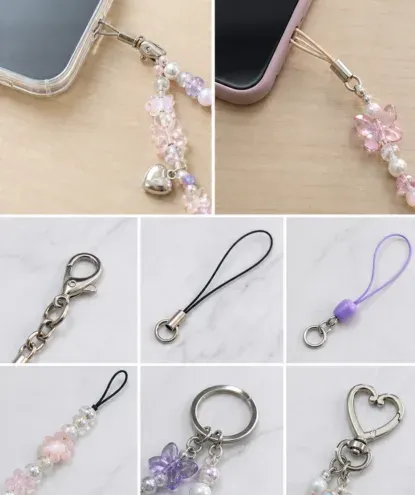
Before you commit to anything, check your charm hardware too. A lobster clasp or metal clasp clips on and off easily, while a fixed strap loop or attachment cord usually holds more securely for everyday carry. Beaded phone straps, split rings, and keyrings each attach a little differently, so a quick look at what you have saves time later.
The 4 Methods for Attaching Phone Charms
Method 1 – Lanyard Hole or Lanyard Loop
If your phone case has a lanyard hole or lanyard loop, start here. It is the most secure option because the load passes through a purpose-built attachment point rather than a borrowed one.
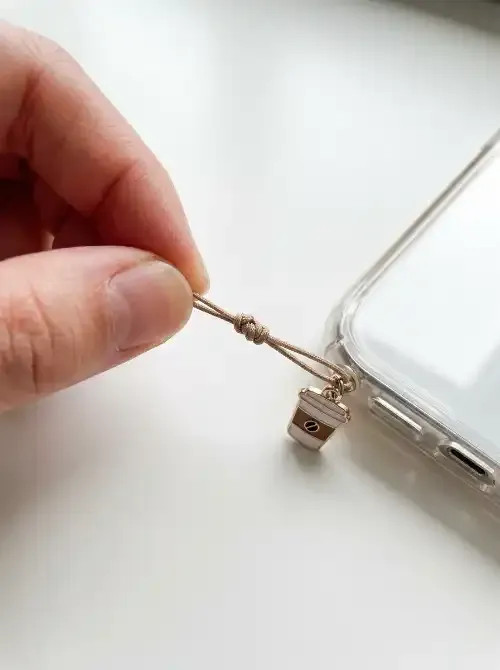
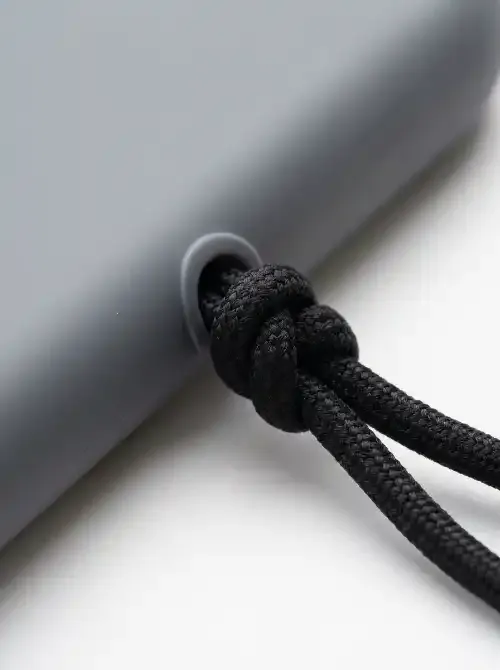
Thread a thin attachment cord through the hole. If the case opening is snug, a needle threader, a dental floss loop, or a short length of fishing line can pull it through without a fight. Once the cord is through, pass the charm through the loop and pull it snug. This forms a lark’s head knot that locks without extra hardware.
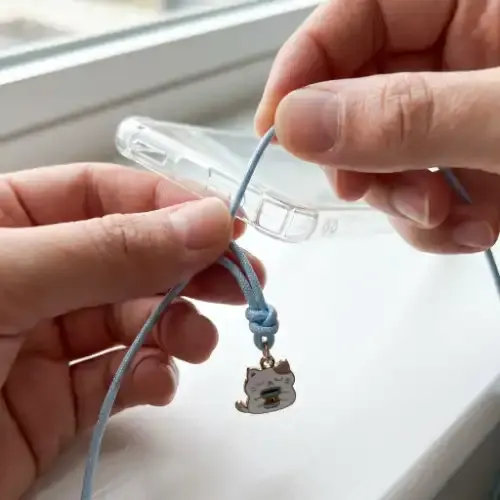
Check that the cord sits flat and does not twist inside the hole. A lightweight design matters here because the heavier the charm, the more strain is placed on that single attachment point.
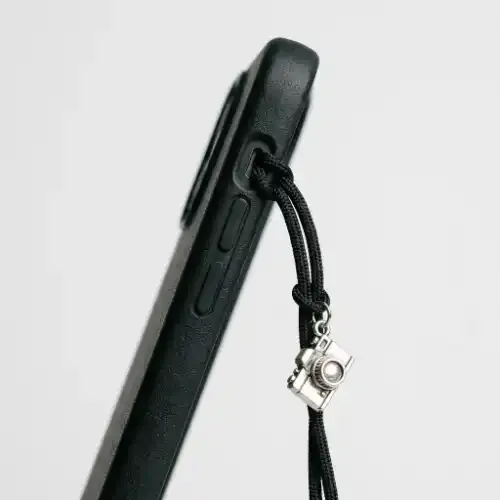
Method 2 – Mute Switch Cutout or Side Opening
Some cases have a mute switch cutout wide enough to double as a side opening for charm attachment. Threading from the inside of the case usually seats the cord more cleanly and reduces friction against the phone frame.
This works, but treat it carefully. Side openings were not designed for load-bearing use. Use a reinforced loop and keep the charm weight modest. Skip this method entirely on a soft TPU case, the material at the cutout edge can tear under repeated sideways pull.
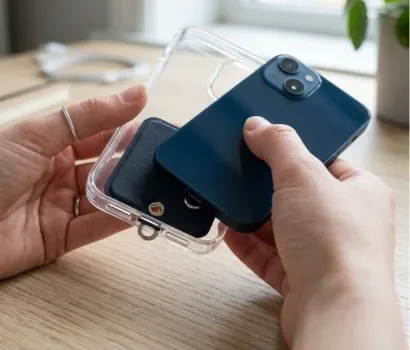
Method 3 – Charging Port Insert or Attachment Card
For hole-free cases, slide a charging port insert (also called an attachment card) inside the case so the loop exits through the port cutout at the bottom. Once the phone is seated, attach the charm to that exposed loop.
Test your charging cable immediately after. A tab that is too thick can distort the port area and reduce drop protection over time. When possible, choose a tab with a metal eyelet, as the eyelet prevents the attachment cord from cutting through at the highest-stress point.
Pro Tip: If your phone still has an audio jack, a small jack jumper plug snaps into the 3.5mm port, giving you an instant attachment point with zero case modification.
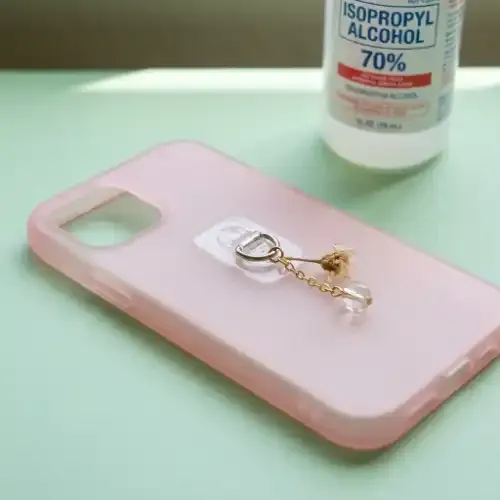
Method 4 – Adhesive Charm Tab
When none of the above work, a pressure-sensitive adhesive charm tab on the outside of the case can hold a light charm. Clean the case surface with isopropyl alcohol, let it dry completely, press firmly for 30 to 60 seconds, and do not load it until it is dry. That last part is where most adhesive tabs fail.
This method works best on a hard plastic case. A silicone case, textured TPU, or any oily surface provides only partial contact with the adhesive at best, leading to peel failure. Keep the charm light and watch for snagging as the charm swings against the case edge over time.
Tying the Knot So It Stays
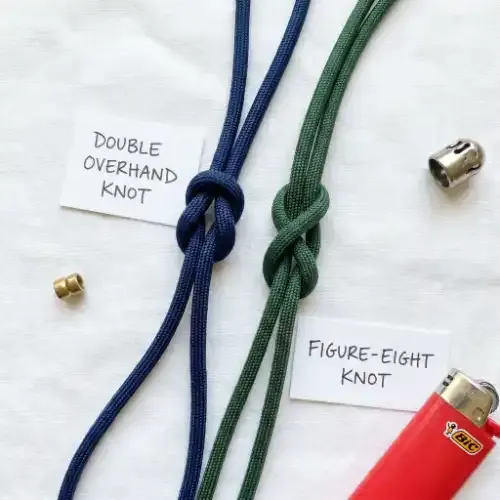
A double overhand knot handles most attachment cord setups reliably. If you need a larger stopper that won’t fit through a small case opening, a figure-eight knot is the better call. Avoid elastic string for anything you plan to keep long-term. It gradually loses tension, and the charm will loosen on its own.
For a clean DIY phone charm finish, carefully heat-seal the cut ends of nylon cord with a lighter to stop fraying. Add a crimp bead or knot cover at the tie-off point to protect the cord from friction wear and give the whole thing a finished look.
The Pull Test (Do Not Skip This)
Before the charm ever goes in a pocket, give it a firm tug. A solid attachment does not shift, slip, or creak. If anything moves, redo the knot or recheck the hardware. It takes ten seconds and catches most failures before they happen in real life.
Most charm failures trace back to three things: wrong method for the case type, too much charm weight on the attachment point, or a knot that was not properly seated before daily use.
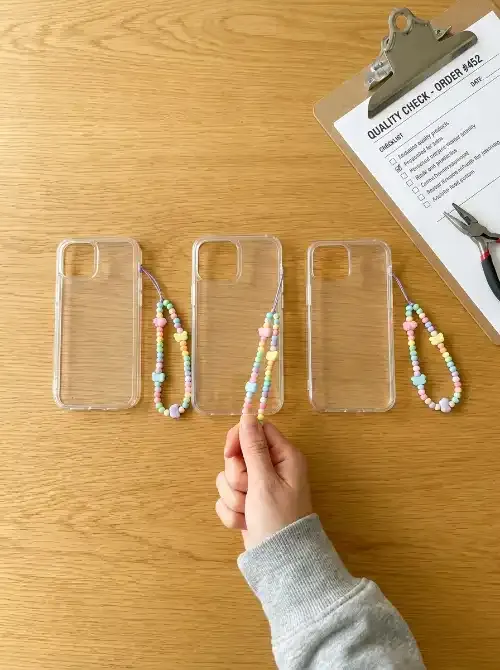
Watch for sharp case edges that create snagging over time. Route the cord through the cleanest, least obstructed path you can find. And if you are distributing enamel phone charms in bulk for events, employee kits, or school spirit programs, pull-test a sample before anything ships. One quick check is a lot cheaper than a batch of returns.
Ready to order custom phone charms your customers will actually keep? The Monterey Company has made custom accessories for 35+ years. Get your free quote today!
Sources

Eric Turney
Eric Turney A devoted father, football fanatic, and stand-up comedy enthusiast who loves nothing more than bringing people together over great food and a good time. When he’s not cheering on his favorite team or experimenting in the kitchen, you can find him connecting with others on LinkedIn

 Coins & Medals
 Corporate Gifting & Events
 Custom Labels & Accessories
 Everything Keychains
 Headwear
 Holidays